
It started off as a simple side trip on our way home from Stratford-Upon-Avon. A chance to look at something which had nothing at all to do with Shakespeare.
So it seemed a good idea to spend an hour or two with some cute puppies while learning about the work of the Guide Dogs Association.
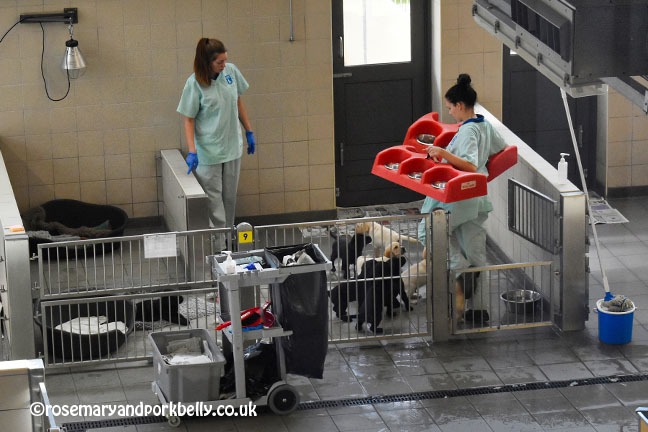
But our tour of the National Breeding Centre near Leamington Spa opened our eyes (no pun intended) and reminded us how lucky we are to be able to travel, often at short notice and on a whim.
Travel is a privilege, but we believe everyone should be able to explore this world, even if it’s only the treasures on their own doorstep.
And for many people with a visual impairment, travel would be impossible without the support of a guide dog.
The centre offers free tours to individuals and groups – all you have to do is register in advance.
Around 1,500 pups each year start their journey here and not all of them will make the grade.
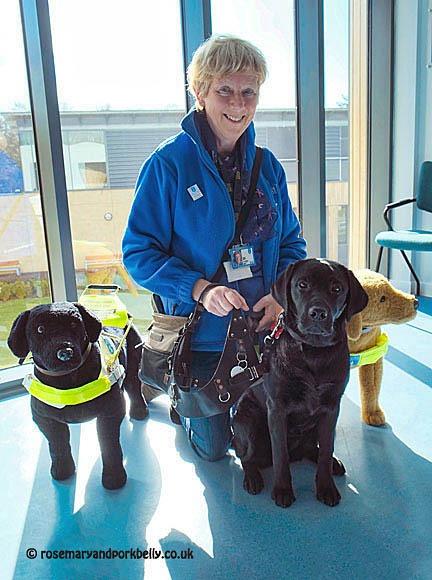
Volunteer puppy-walker Linda and her 6 month old black Labrador Sophie took us around the purpose-built centre and explained just what it takes to turn a curious, friendly and highly distractible pup into a serene and steady guide dog.
Training a Guide Dog
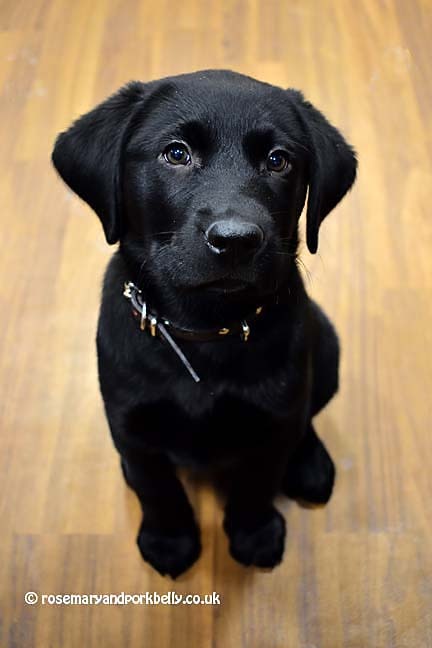
From 6 weeks to 12 months the dogs get a great start in puppy-walkers’ homes, learning how to deal with everyday experiences.
At a year old they undergo specific training, learning the different commands for activities they’ll need to perform for their owners.
The final stage is when a dog is carefully matched with a blind person and they both undergo a two week tailored training programme learning to work together.
The whole process costs around £56,000 for one puppy.
John Garrett, Volunteering Consultant for the Centre says his guide dog Kahn is more than just an aid to mobility.
“With the traditional cane it’s all about what you can’t do, where you can’t go, what you can’t make sense of. For me having a guide dog is about space, speed and possibility. We can explore together and I have the emotional confidence and resilience to deal with what we meet.”
Partnership and play
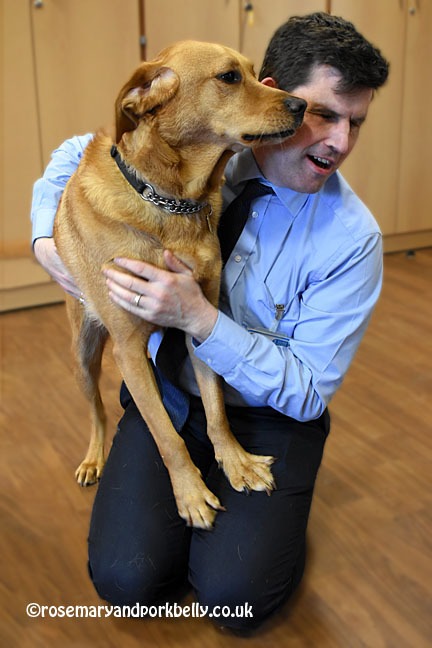
Watching John play with Kahn in his office it’s clear they are a real partnership.
“The bond of trust is the foundation of the relationship. The more you bond the more you work intuitively together. Living with a dog is like living with a person, you get to know their spoken and unspoken nuances. It’s as much about the owner reading the dog as the dog reading the owner.”
But even with the freedom a guide dog brings, visually impaired people face real problems when travelling.
John Welsman is the Policy Business Partner for Travel & Mobility with Guide Dogs. He says people with a disability have the right to travel but, particularly if they use a dog, they have to travel responsibly.
“Most of the time we are pushing at an open door as businesses realise what they need to do to ensure access for blind people. The law says they must make “reasonable adjustments” but the dog owner needs to be pragmatic. Personally I always phone ahead to a restaurant, for example, to check they are okay with me bringing my dog, Breck.”
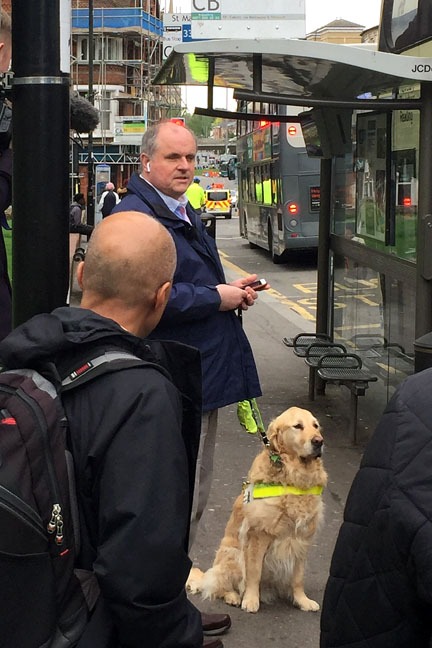
Travelling with a Guide Dog
In the UK it is against the law to treat people with disabilities less favourably.
There are a few places where it may be inappropriate to take a dog, but as a general rule, if the public is allowed access, so is an assistance dog. Sadly a survey by Guide Dogs in 2015 showed 75% of respondents had been refused access at some point because of their dog.
“There can be problems with taxis,” John explains.”Most drivers are fine, but we do hear of some refusing to take someone or claiming they have an urgent call which takes them away from the rank if they see someone with a guide dog. It’s very hard to prove and is frustrating for the guide dog owner. It’s one of the real challenges we face.”
Guide dogs aren’t for everyone, but for those who go through the rigorous training and matching process they can be life-changing. In some cases literally opening up new worlds.
Richard Lane has been blind for over 25 years and has owned three guide dogs, Norton, Simpson and his current companion, Topper.
All three have guided him in and around London for his work. As Topper approaches retirement they’re taking a sabbatical together in the south-west of France where Richard says they’re enjoying a peaceful, rural existence.
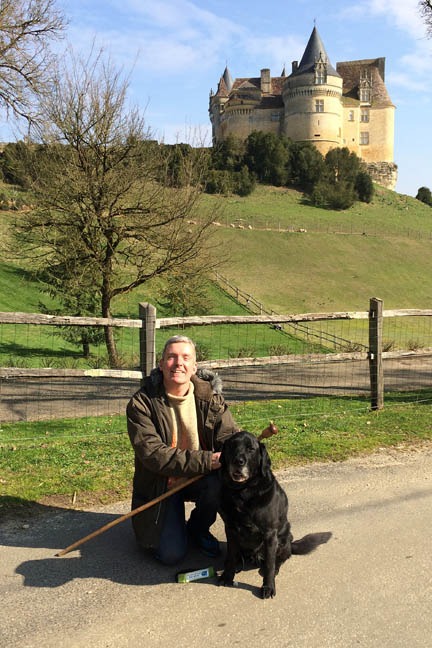
Working as a team
“Topper guided me brilliantly from my house to Farnham station, then from Waterloo via the tube to the City. I could travel from my front door to my office, a journey of 1 hour 40 minutes without needing any human help, which is fairly remarkable.”
“I first met Topper on Good Friday 2010 when he was proposed as my next guide dog after Simpson’s retirement. We hit it off immediately, and have been a great team ever since. He’s black, very handsome (and seems to know it) rather cheeky, but has been a brilliant guide for nearly 8 years. Topper has a passport and has been with us on holiday to France a couple of times. Now we live here and we get plenty of help from the local vet, and keep in touch with Guide Dogs back in the UK.”
“Although I could theoretically take Topper further afield on business trips in the US or to family in Australia and New Zealand, I choose not to as the journey would be arduous and he wouldn’t be in familiar terrain to guide me effectively. So Topper has on a few occasions gone on holiday in the UK to family and friends while I have been overseas. This is me making the decision to rest Topper, not anyone else.”
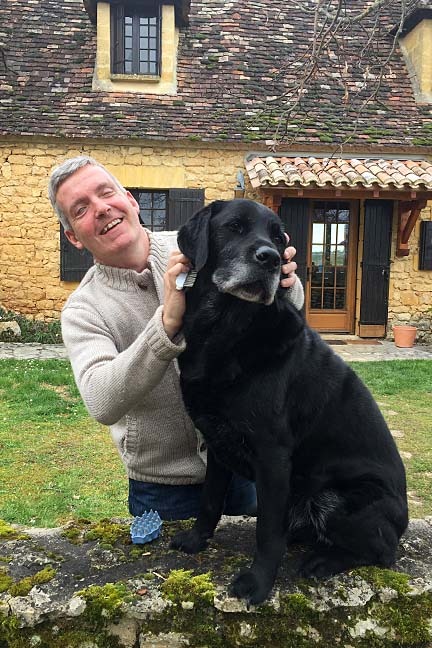
Pros and cons of travelling with a guide dog
John Welsman agrees it’s important for guide dog owners to weigh up the pros and cons of travelling.
“We work with organisations like travel agents, airports, cruise liners and governments to make sure they know how to fulfil their obligations towards anyone travelling with an assistance dog but there are different national, cultural and religious approaches to guide dogs. We’re helping set out standards that will apply internationally to provide assurance that dogs will not cause any safety or other issues.”
“The Civil Aviation Authority for example provides guidance about the accommodation of assistance dogs, but ultimately it is up to an airline to ensure that dogs are safe when travelling with them. We like to help airlines apply the rules in a safe and sensitive way. If an international standard existed, everyone would be working to the same set of rules.”
“But even when you have the right to travel, the well-being of the dog must always be taken into account. Is the proposed method of travel fair on the dog? Will they be able to acclimatise? Are there vets available? Is the culture you are heading to dog-friendly? We’re not here to tell guide dog owners what to do but can advise on all the things they need to think about before setting off.”
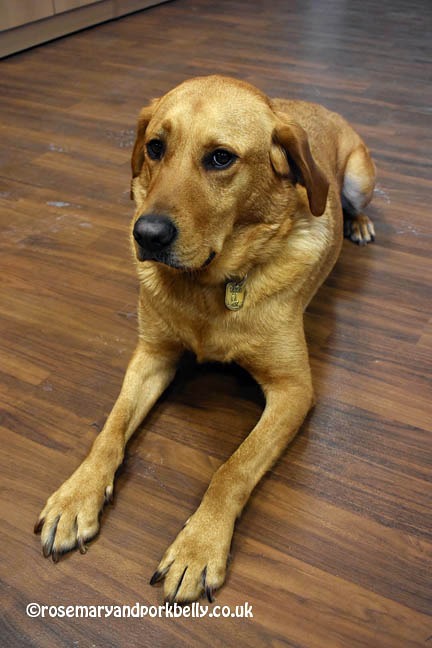
Guide Dog travel checklist
The Guide Dogs Association has a nine page checklist to help would-be travellers which seems daunting to those of us more used to the book-tickets-and-go method.
But all the planning doesn’t put off people like Dave Kent, Engagement Officer for Guide Dogs, who regularly takes his dog Chad on transatlantic flights.
“I love it when I go to an airport with Chad and people see me heading for the check-in area. You can hear them saying “Is the dog going on the plane?” “How will they manage?” Obviously I get priority boarding so again once we’re settled it’s fun to hear people’s comments as they pass by. They’re so excited to see a dog as big as Chad on board.”
Chad’s welfare is top of Dave’s list but Chad himself seems very relaxed about it all.
“Chad’s my ninth guide dog and as I work in London and travel a lot I have always been paired with dogs who are interested in new situations and are not phased or overwhelemed by new things. Chad’s perfectly comfortable flying long distances. I keep him hydrated with ice cubes and we take a walk up and down the aisle every couple of hours during the flight. But usually as soon as he sees his travel bed he curls up in it, settles down and snoozes the trip away.”
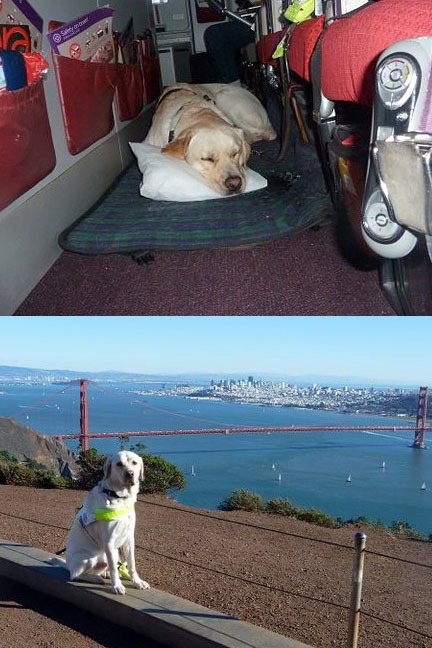
We learned on our tour of the Breeding Centre that guide dogs are trained to “go” on command so even Chad’s natural bodily functions don’t cause too many problems. “I have a puppy mat just in case Chad needs to do his business, but he rarely does.”
Guide dogs and air travel
One drawback though is that Dave can never travel in luxury.
“They have strict weight limits for first classs,” Dave chuckles, “and 40 kilos of labrador retriever would never fit in their smart pods! But having Chad with me gives me the dignity and self respect of being able to walk off the plane myself.”
“My first trip with a guide dog was to Toronto in Canada. It was the perfect city for me as it’s laid out on a grid system which made it easy for my dog and I to get orientated. North America’s a good place to travel, the infrastructure is there, anti-discrimination laws exist and people appreciate working dogs and are quite familiar with them.”
Dave travels extensively, loving Thailand, Indonesia, Morocco and Singapore particularly, but on these trips he leaves Chad behind.
“It just wouldn’t be fair on him, because of the climate. Also as a traveller you have to be sensitive to other cultures, not everyone is comfortable around dogs. To travel without a dog has its own properties but I’ve always found a degree of graciouness about blindness in these countries. Blind people may not have the same social status as sighted people but when locals see a ‘farang’ (foreigner) weilding a white stick like a sightless Zorro, they are interested. “
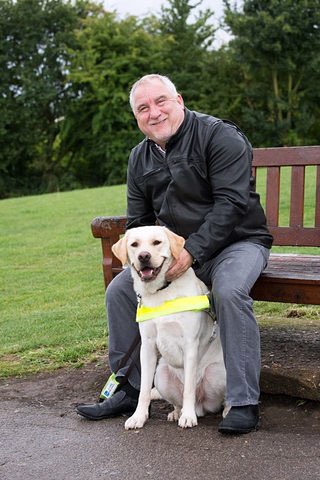
“Some people wonder why I bother to go so far afield when I can’t see the sights but there’s so much more to a country than just looking at things. I love food, in fact it was a Thai meal in a London restaurant that made me decide to go there. I come for the food, the heat, the sounds and smells of the place. Absorbing the culture that’s conveyed through tone of voice, what they say and their perceptions of me.”
“There’s a richness in travelling. I love the noise and bustle of markets and the fact that you can be walking along a street and smell something truly awful, a stench of putrefaction, then moments later you smell spices, delicious food, flowers. And the noise, the people, the conversations. That’s what travelling is all about.”
Day-to-day freedom
Richard agrees that travelling abroad is wonderful, but says it’s often the smaller day-to-day freedoms that really matter.
“My trips to London and getting around Farnham are effortless with Topper; they would be very difficult, though not impossible, if I was solely reliant on my white cane. I don’t think it’s the exceptional trips where Topper makes a difference; more the ordinary day to day ‘getting on with life’ situations.”
All four guide dog owners agree having a dog is more than just an aid to mobility, as Richard explains.
“Aside from being a fabulous guide over many years, the thrill and love and passion for Topper as a quirky, cheeky, lovely dog is hard to express in words. I have always been a dog lover so getting a guide dog was always going to be easy. The relationship between myself and all three of my stunning dogs has been exceptional, as I invest enormously in them, and in return, a bond is created which is really quite extraordinarily profound.”

How everyone can help
And for those of us without a disability who might encounter a blind person while travelling? Dave has some excellent advice.
“Celebrate the fact they are travelling. In fact we should all celebrate each other for our ability and willingness to travel and to respect those decisions. As a guide dog owner you should respect the place you are visiting. Not everyone has same attitude to dogs. The legislation may exist but people may have different feelings. We’re all the same travelling family and our ability to travel is something special.”
Whether that travelling is across the globe or simply around the corner, the work of the Guide Dogs charity is what makes it possible.
John Garrett sums it up beautifully.
“It’s wonderful to think there’s a furry creature with a heart out there in someone else’s home whose path is about to cross with yours and change your life”.

More information about Guide Dogs for the Blind
For details of the charity and how you can support them by fund-raising or sponsoring a puppy see their main website.
For more specific details about travelling with a guide dog or any other assistance dog see their resources page. This includes an extensive travel checklist of everything you need to consider when travelling abroad with an assistance dog.
Where next?
• Wildfowl and Wetlands, Arundel
• Dog-friendly holiday cottages UK
• Island Life – Isle of Man
What a wonderful article. I hope it helps to get the message out.
Thank you, it was a pleasure to research and write. The Guide Dogs Association does some amazing work.