

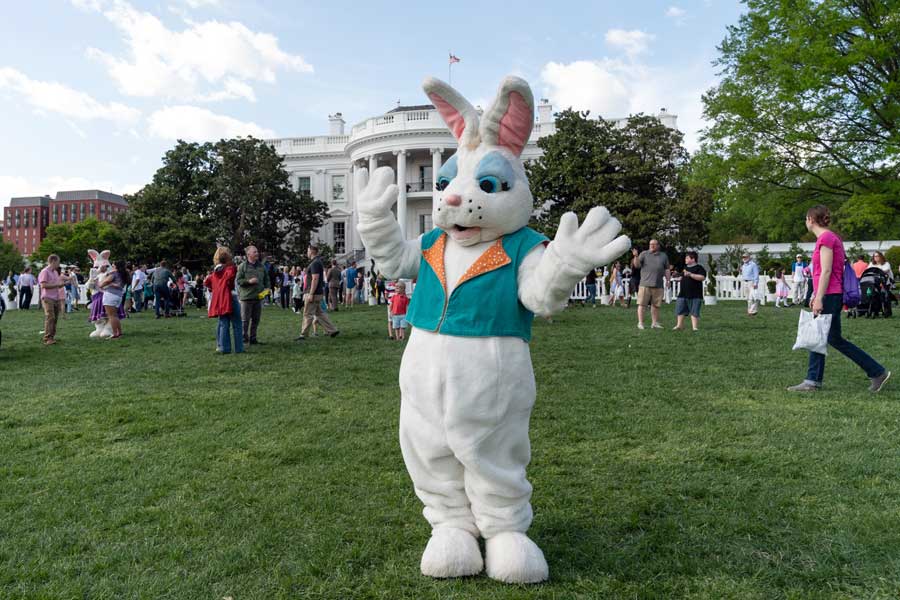
Here comes the Easter Bunny, joyfully – and somewhat illogically – laying eggs in nests of hay scattered around the garden.
Despite an egg-laying bunny being completely against nature, it’s just one of the tall tales we’re happy to accept when we’re young, and it doesn’t stop at rabbits.
There are so many weird and wonderful Easter traditions around the world.
A brief history of Easter eggs
Before we get into the bizarre stuff, let’s talk about Easter eggs, whose history is long, sometimes dark and occasionally blood-spattered.
People were giving gifts of eggs long before there was any Easter to celebrate. Decorated and engraved ostrich eggs more than 60,000 years old have been found in Africa.

The early cultures of Mesopotamia and Crete associated eggs with death, rebirth and kingship, while the ancient Sumerians and Egyptians placed gold and silver eggs in the graves of the powerful to signify their status in the next world.
The custom of eggs at Easter-time began among the early Christians of Mesopotamia, who stained eggs with red colouring to represent the blood of Christ shed during his crucifixion.
Much later the egg, with its promise of new life, became a symbol of the resurrection of Jesus.
So how did a simple boiled and coloured egg become the chocolate confection we offer up today to the gods of sugar and commerce?
As with so many things, egg-based traditions merged with other celebrations to mark the end of the Lent period and gradually became an excuse for indulgence.
In Britain during the 17th and 18th centuries, egg-shaped toys became popular Easter gifts and Victorian children could expect a cardboard egg, decorated with fancy fabrics and filled with Easter gifts and chocolates.
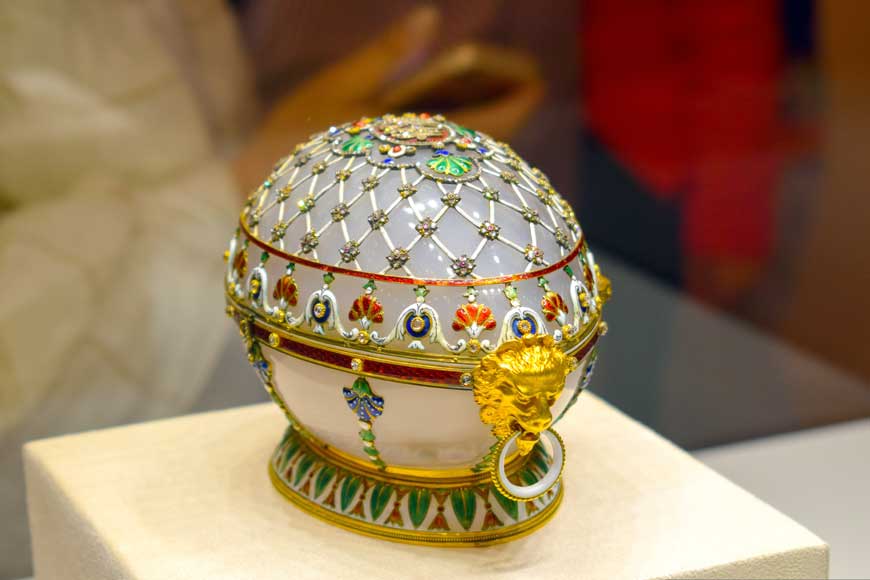
In 19th century Russia they went a step further, with the gloriously jewelled creations of Carl Fabergé made specially for the ruling Czar and Czarina.
When were Chocolate Easter eggs first made?
Chocolate Easter eggs first made an appearance in Europe in the early 19th century, with France and Germany taking the lead.
At this time they were solid confections, as the technique for moulding hadn’t yet been mechanised. Hollow eggs could be created, but had to be individually crafted by layering chocolate into the moulds.

And the rest, as they say, is history.
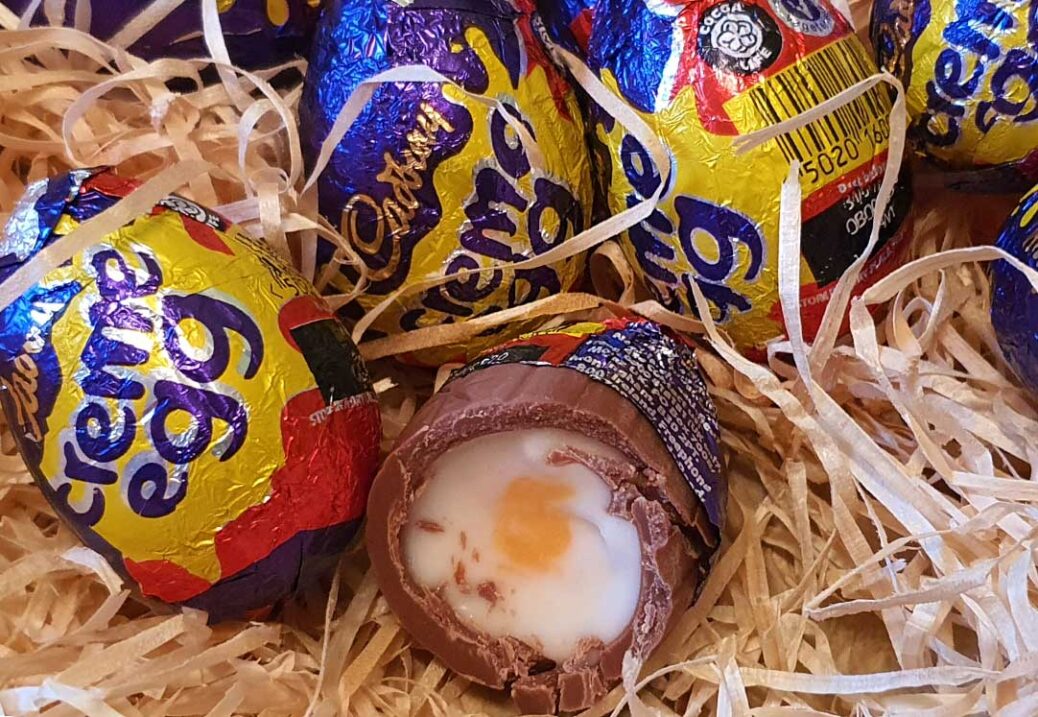
The popular Cadbury Creme Eggs, however, weren’t invented until 1963 under the name Fry’s Creme Eggs. The name changed to Cadbury Creme Eggs in 1971 and the recipe keeps being tweaked, some say to its detriment!
10 weird and wonderful Easter traditions
So the Easter egg is universal, but every country has its own unique way of celebrating the season. Here are 10 of the most weird and wonderful Easter traditions around the world.
Wet Monday, Poland
On Easter Monday, Poles take to the streets for Śmigus-Dyngus, also known as lany poniedziałek, or Wet Monday.
Basically, it’s an excuse for one big water fight, while the more traditionally minded hit each other with willow branches.
Trick or treat, Sweden and Finland
A witch is for Easter, not just Halloween! On Maundy Thursday or Holy Saturday, Swedish and Finnish children dress up as witches, old women and old men and go door to door for treats.

Pot Throwing, Corfu
Taking spring-cleaning to the extreme, locals in Corfu welcome Easter Saturday by hurling old pots out of their windows. It may originate with the Venetians who threw away old, unwanted stuff at new year. Others say it’s a symbolic way to recreate the earthquake that was said to have followed the resurrection.
Just remember if you want to travel to Corfu to experience it, Greeks celebrate Easter using the orthodox calendar, later than we do in the UK.
Sprinkling perfume, Hungary
Painted eggs are a traditional part of Hungarian Easter celebrations, but so is ‘locsolkodás’ where boys and men recite poems then sprinkle women and girls with perfume.
Things can sometimes get rowdier with buckets of water, but most stick to the sweet-smelling option.
Burning Judas, Mexico
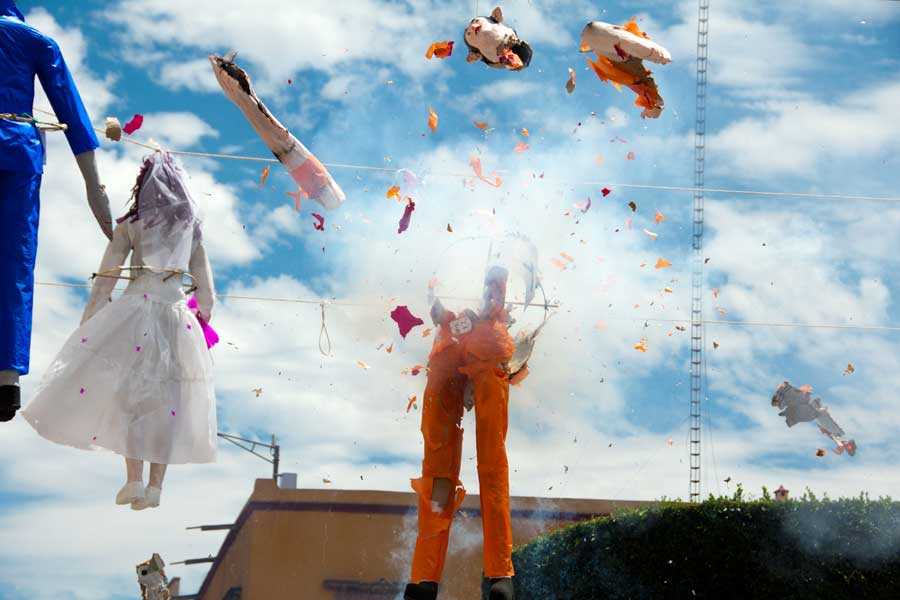
An effigy of Judas Iscariot is burned in many towns and villages on Easter Sunday, as a symbolic way to get rid of evil.
In recent years, other unpopular public figures have been made and set alight, instead of the apostle known for his betrayal of Jesus.
They also have a habit of blowing them up!
Kite flying, Bermuda
Bermudian kites are rather special. Made using traditional geometric designs, they are usually hexagonal and always brightly coloured.
Traditionally they are only flown at Easter, usually on Good Friday.
Flying Bells, France
On Easter Sunday, it’s said all the church bells of France fly to Rome to see the Pope.
Little children are told to listen carefully, and as the bells fly home, they might just drop eggs into the garden on their way.
Egg rolling, UK and USA
Do you trust your egg?
Yes?
The why not roll it down a hill on Easter Sunday? The winner is the one whose egg goes furthest without breaking. Communities across the UK and USA host these Easter contests.
Egg tapping or knocking, traditionally England but now worldwide
In old folk traditions, egg tapping or egg fighting is known as shackling, jarping or dumping. The rules, rather like the autumn tradition of conkers, are to hold a hard-boiled egg and tap another person’s egg with yours. The aim, naturally, is to crack theirs without damaging yours.
And just as tricksters in autumn try to make their conker best by baking, pickling or other illegal elements, egg tappers have been known to insert cement into their eggs before starting the fight.
Scoundrels!
Pace Egg, England
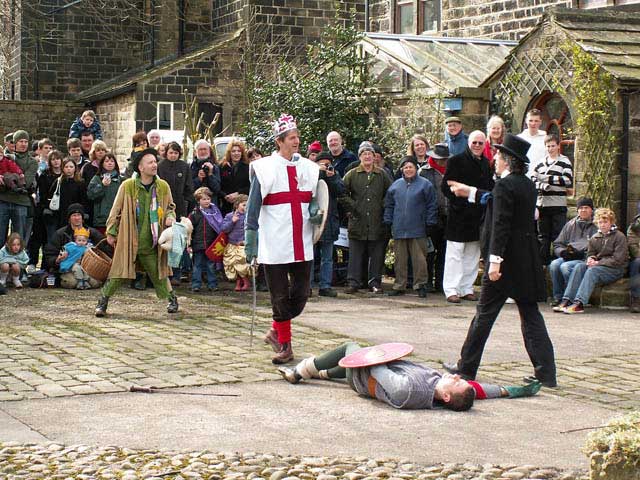
Being from ‘down south’, Pork Belly and I have never participated in this Easter tradition from the north of England, when people dress in colourful clothes, visit homes, sing, dance and get paid in sweet treats or the highly coloured Pace Eggs.
Traditionally, Pace Eggs are wrapped in onion skins and boiled, giving the shells a golden glow, but today they are usually painted.
Pace Eggs have been around for centuries. In the household accounts of King Edward I there is an expense of ‘one shilling and sixpence for the decoration and distribution of 450 Pace Eggs’ and the Wordsworth museum in Cumbria has a collection of decorated eggs made for the poet’s children.
In some parts of Lancashire and Yorkshire a special play would be performed, featuring mock battles where the victor was rewarded with Pace Eggs.
The custom has mostly died out now, but there are some local revivals of the tradition.
And finally …
5 weird and wonderful facts about Easter
- Easter Island got its name when the island’s first recorded European visitor, the Dutch explorer Jacob Roggeveen, discovered it on Easter Sunday in 1722. Its Polynesian name is Rapa Nui.
- Good Easter and High Easter are villages in Essex, just north of Chelmsford, but their names having nothing to do with the Christian festival. Instead, they come from the Old English word ‘eowestre’ meaning a sheep fold.
- Whilst some say a Simnel cake is historically made for Mothering Sunday, most agree it’s traditionally an Easter cake, with the marzipan balls on top representing the apostles – either all 12 or 11 if you leave out Judas.
- There used to be a superstition that if you wore new clothes on Easter Day, you would have good luck for the rest of the year. That’s probably the reason behind old Easter parades and Easter bonnets – for good luck.
- The aforementioned Easter bunny didn’t originally lay eggs. Instead, she was the companion of the spring goddess worshipped by the Anglo-Saxons at the festival of Eastre and represented fertility.
So whatever you’re doing – rolling, tapping, pot throwing or just stuffing yourself with chocolate – have a Happy Easter.

Some images reproduced under Creative Commons licence or Public Domain
Where to next?
• Chocolate
• Vegan raspberry and white chocolate no-bake cheesecake
• 9 reasons not to bypass Shoreham