
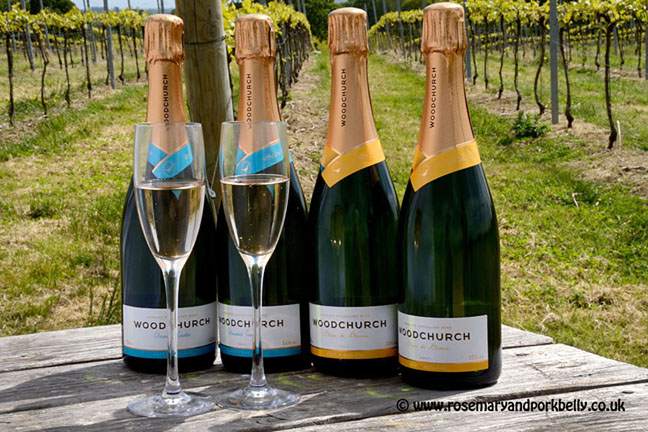
I saw this field when it was just pasture and I fell in love with it
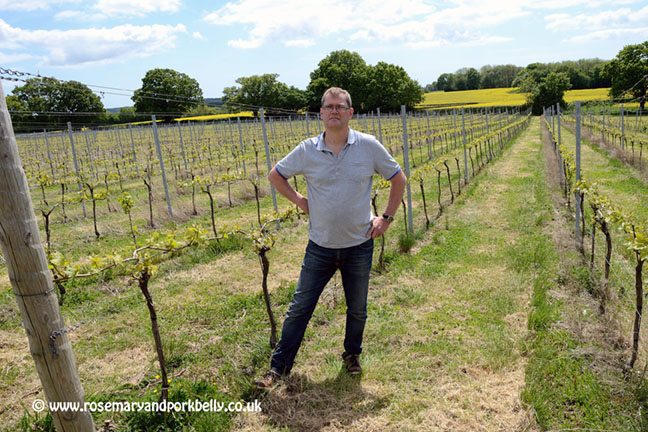
On a beautiful, sunny Sunday in May, Graham Barbour can be excused for waxing lyrical about his small vineyard on the Kent-Sussex border.
Five years ago, he and his wife Donna bought the field at auction. Now their first two sparkling wines are on the market, both award-winners, straight out of the gate.
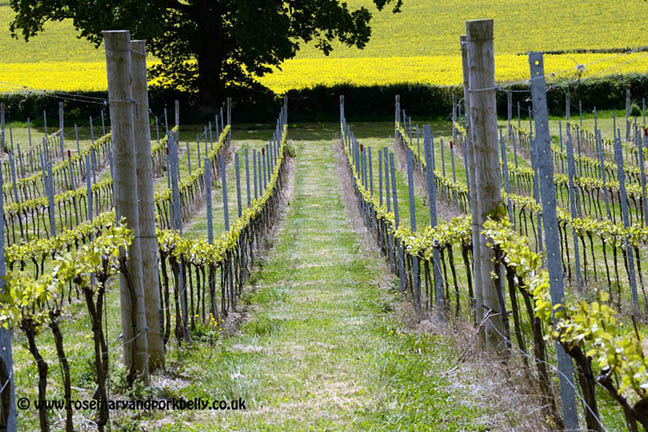
Standing in the gently sloping field, looking out across a blazing yellow carpet of rape to the wind farm on distant Camber Sands, you can sense their pride of ownership.
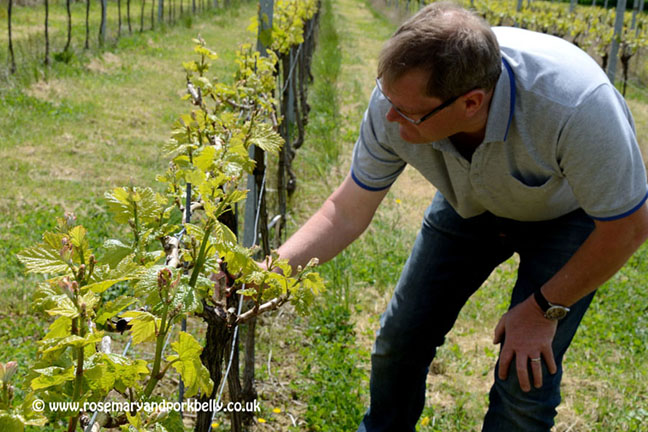
As we walk, Graham is constantly checking the vines, stripping off spurs, examining the leaves and the flower buds, just beginning to unfurl in the warm spring sunshine.
“I’ve always known I wanted to live in Kent, and when I met Donna she’d just returned to England after living abroad for years, so the pull of the English countryside was very strong.
It’s not that we set out to be entrepreneurs, building up a massive business, it’s just we wanted to leave our publishing jobs in London and get rooted in the Kent countryside.
The idea of owning a vineyard grew out of a family joke.
“I have two sons from a previous marriage. When I first met Donna, we would travel around the country visiting English vineyards and my boys would often come with us. One day, one of them said, ‘What will you do when you run out of vineyards to visit?’ I said, ‘Buy one of my own’. We all laughed, but the idea took root and just grew.”

The English wine scene
“Owning a vineyard is a long-term venture. You don’t see much return for several years, and it takes a long time to really get established. In a way that’s what gave us the confidence to try, we felt we could start small, learning what we needed to know step by step and slowly building our expertise.”
They both enrolled on viticulture courses at Plumpton College in Ardingly, to learn the basics, then invited Kevin Sutherland, winemaker at Bluebell vineyard, to be their consultant.
“The English wine scene is small, but full of really helpful people willing to share their knowledge and support each other. We couldn’t have got where we are today without that.”
It’s a constant battle though to keep pests away from the vines.
“When we started out I was warned about the threat of deer, rabbits and even badgers. We do have a sett nearby, and the badgers have decided to make their toilet almost dead centre of the vineyard, but our worst problem was with mice.
They’d gnaw and nibble away at the young vines’ roots until they died. I couldn’t believe it at first, but it was definitely mice.”

Setting traps out in a field seemed an odd thing to do, so they encouraged natural predators to move in.
“We want to keep the countryside as natural as possible. One of our plans is to have a little nature trail around the vineyard. So we built a nest box to encourage barn owls.
No luck yet, but a few kestrels came by and made their home higher up in the tree. Now the vines are older they can withstand a little nibble or two, so that problem is solved.”
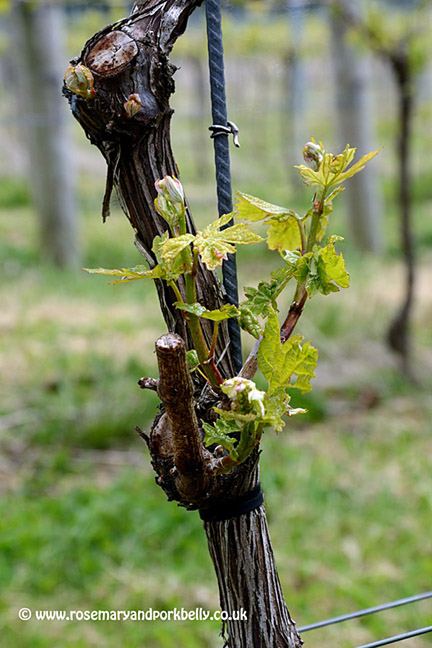
As with all English vineyards, they produce cool climate, sparkling wines, using chardonnay, pinot noir and pinot meunier grapes.
Award-winning English wine
“There’s very little difference between what we produce here in the south of England to that of the big champagne houses in France. The main reason why they can get such weighty, yeasty champagnes is they’ve been going longer. But now English wine has been established for several years, I think we can begin to rival them.”
That’s certainly been borne out by recent international wine awards, where time after time English wines are equalling and sometimes surpassing the more established wines.

“As we’ve just begun here, we had a limited yield in 2012 so decided to just use pinot noir and pinot meunier for our Classic Cuvée. The Blanc de Blanc is 100% chardonnay grape.
We’ve produced only 2,000 bottles this year, we’re keeping back the rest to blend with future harvests and hope to produce more and more each year.”
At the moment Woodchurch is too small to process the wine on their own estate, so again they’ve enlisted the help of Kevin Sutherland at Bluebell to be their winemaker.
“We like the style of wine Kevin produces, but it’s a real partnership. Of course Kevin has years of experience, and we are guided by him when it comes to blending, but our wines are made to our taste.
In fact, it was Donna who held out for a more ‘oaky’ style for our Blanc de Blanc. We were thrilled when it received a bronze award in the International Wine and Spirit Competition’s (IWSC) awards. Even better, our Classic Cuvée got a silver and also took bronze in the 2015 Decanter awards.”
We don’t think Kevin will begrudge them their success, as Bluebell’s Hindleap Blanc de Blanc 2010 and 2011 Brut rosé both won silver in the IWSC competition.
The Barbours are in no hurry but do have plans for the future.
English wine – a long-term investment
“We know it takes about 15 years to get established and with wine taking so long to mature you have to invest heavily up front before you get any money back. So at the moment we are staying small, producing limited stocks of numbered bottles. We’ll attend a few events to raise our profile and sell from our website. “
Right now we’re concentrating on raising strong healthy vines, fighting off pests and calling in an army of friends, volunteers and casual labour to help with the big tasks like pruning and harvesting.”
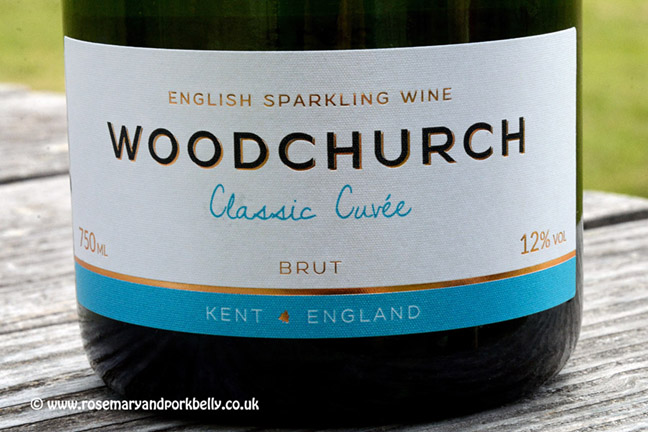
Sitting in the warm spring sunshine, eating a freshly prepared picnic and listening to birdsong and nearby tractor engines, it’s time to taste for ourselves.
Tasting Woodchurch Wine
We’ve said before that neither Pork Belly nor I are wine experts but we are always willing to learn and the more we try, the better we get at explaining what it is we like or don’t like. As Cathy and Nigel Henton at le tasting room taught us, that’s what wine tasting is all about.
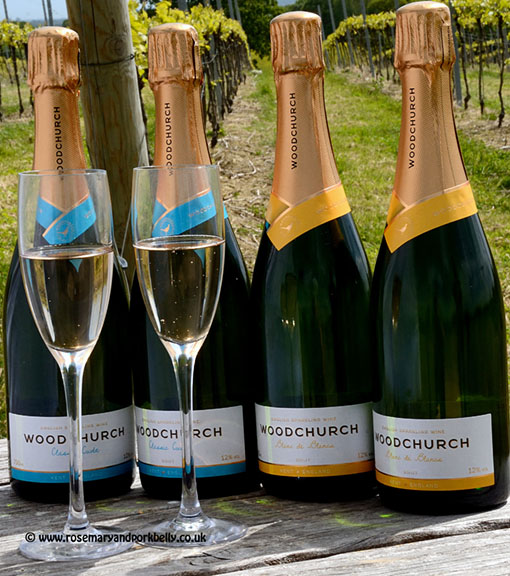
The Blanc de Blanc is a pale golden sparkling wine, with tiny bubbles. It’s got a real lemony zing but what lingers on the palate is a creaminess, reminding us of the custard apples we ate in Australia although not so sweet. That’s the oakiness coming through, which gives wines a touch of vanilla. This was Pork Belly’s favourite; it’s much closer to the classic French champagne and in time will probably develop the same yeastiness.
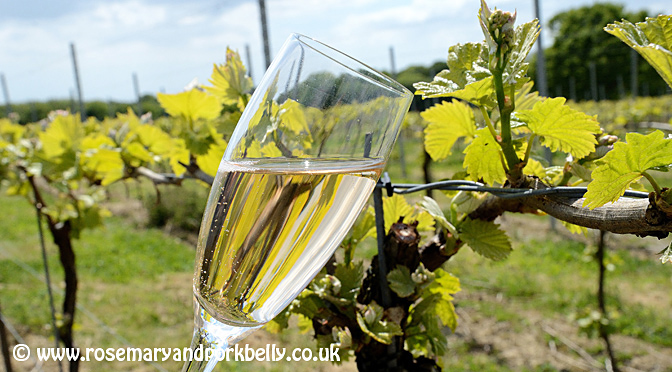
But I fell in love with the Classic Cuvée, a golden wine with the tiniest hint of pink. The light aroma, smelling of summer fruits, took me by surprise. It didn’t seem at all pretentious to behave like a real wine buff and sniff the glass for a long time before sipping.
On the tongue the red fruits are there, although on this day I detected more plum than strawberry, with more than a hint of peach.
Graham agrees that the choosing of a wine is all down to personal taste.
“Donna and I prefer the lighter, fruitier wines, and that’s what we will concentrate on for a while. We have set aside some pressings from the pinot noir grapes and may be able to produce a still red wine in the next few years, but we are taking it slowly and steadily, learning as we go.”
Well, one silver and two bronze awards sound like a flying start.
More information about Woodchurch Wine
All their wines both sparkling and still can be ordered from their website
Find out more about English wine – origins and industry.
Where next?
• Queen Bee Vineyard, Massachusetts
• Chateau du Rivau – a garden for all ages
• Time to discover the English Riviera