
Sussex isn’t just rolling hills and seaside charm – it’s also the birthplace of British film magic. In Hove, trailblazing moviemakers dabbled in trick photography and cinematic sleight of hand, while nearby Shoreham enjoyed a brief but fabulous moment in the limelight as Hollywood-on-Sea. For a fleeting few years, the coast was alight with cameras, costumes, and the occasional exaggerated stage whisper.
Meanwhile, Brighton has always had a thing for the dramatic. From flamboyant performers to visionary filmmakers, the city has long been a siren call for the creatively inclined.
Early pioneers in Hove helped usher in cinema’s golden age, and back when cinemas were cathedrals of escapism, Brighton’s streets gleamed with their grand façades. This walking tour invites you to tread the boards of Brighton’s storied past – from majestic theatres to hidden silver-screen gems.
Discovering Brighton’s cinema and theatre past
Of course, you can do it yourself, with lots of online research, trips to museums and libraries and a deep dive into local history.
Or – and hear us out – you could take the leisurely route. Pop in your headphones, follow a self-guided audio tour, and let your curiosity take the reins when something shiny (or historically fascinating) catches your eye.
That’s our style too. Which is why we love the series of free audio walks created by QueensPark books – a publishing company based in Brighton, dedicated to unearthing stories of the past and bringing long-dead voices back to life.
We enjoyed their Seaside Stories – a route along the seafront from the melancholy remains of the West Pier past the delightful Volks Railway and on to the Banjo Groyne.
This time, we dipped into their Back Row and Backstage tour, part history lesson, part theatrical love letter, and let it lead us on a whimsical wander of our own. Pork Belly (camera in hand, as always) was on location detail, while I slipped on some headphones and let the anecdotes wash over me like a velvet curtain.
So come with us as we stroll through Brighton’s glittering stage and screen history.
QueenSpark Books Discover Brighton Project
Launched in 2020 their series of audio guides take you in and around the city, using real people’s memories to focus on a specific theme whispering in your ear.
Accessibility of the audio tours. Many of the routes are on flat even paths like the promenade, but Brighton is built on seven hills so some inevitably include a gentle incline. Where access is by steps, alternative routes are given.
If you want to know more on any of the topics, you can buy their books online.
St Ann’s Well Gardens, Hove: Lights, Camera… Pump House?
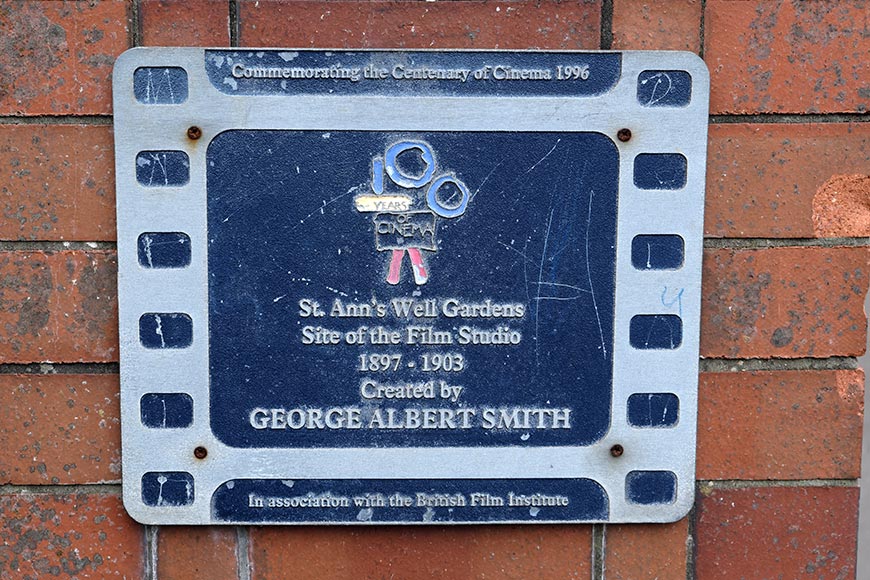
Our journey begins in the verdant calm of St Ann’s Well Gardens, on the border of Hove and Brighton, a spot once famed for its Victorian spa waters and, more intriguingly, for its starring role in early British cinema.
In 1897, a certain George Albert Smith, magician, hypnotist, and cinematic trailblazer, set up shop in the old pump house. Armed with a newly acquired camera and more imagination than was strictly healthy, he produced a staggering 31 films that year alone.
Close-ups, jump cuts, trick photography – Smith was experimenting with techniques long before Hollywood knew its elbows from its establishing shots. These innovations, cooked up in this leafy park, would go on to shape the grammar of film itself.
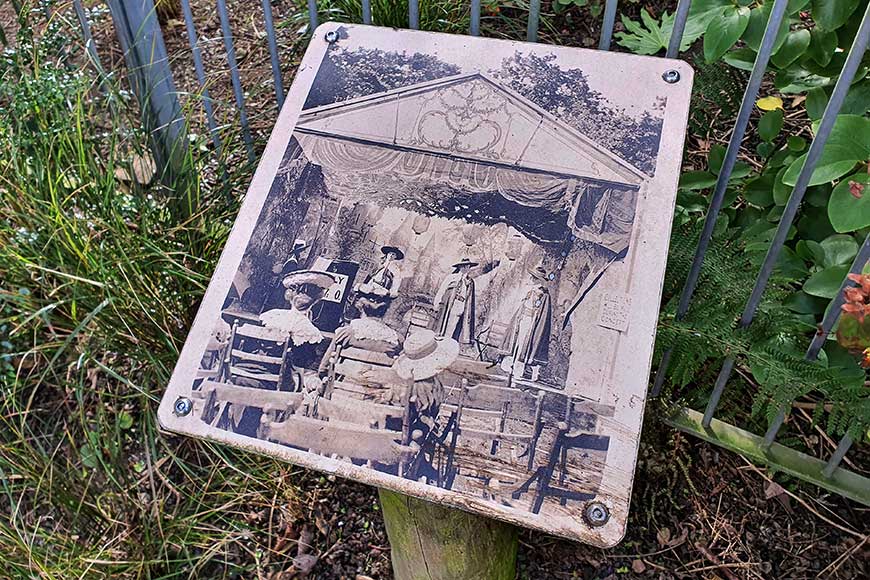
Today, the pump room is no more – razed by time and indifference – and all that remains of this glittering chapter is a modest plaque at the entrance and a quietly dignified black and white photo in the sunken garden, off to the right of the main gates. If you squint just right, you might even catch a flicker of film magic in the air.
Snackattack
Need something before you start your journey?
The Garden Café serves hot drinks, light bites and sweet treats.
It’s well-used by locals and has a reputation for honest, home-cooked food.
Hove Cinematograph Theatre/Tivoli/Embassy
Taking the gentle slope from the park down York Avenue to York Road and you’ll pass 40b, a basement flat where Brighton Unity Theatre, a socialist workers movement, opened in 1936 to put on anti-fascist productions.
At the bottom of the hill, you reach Western Road. Locals with long memories will recall the Embassy cinema here, which only closed in 1981.
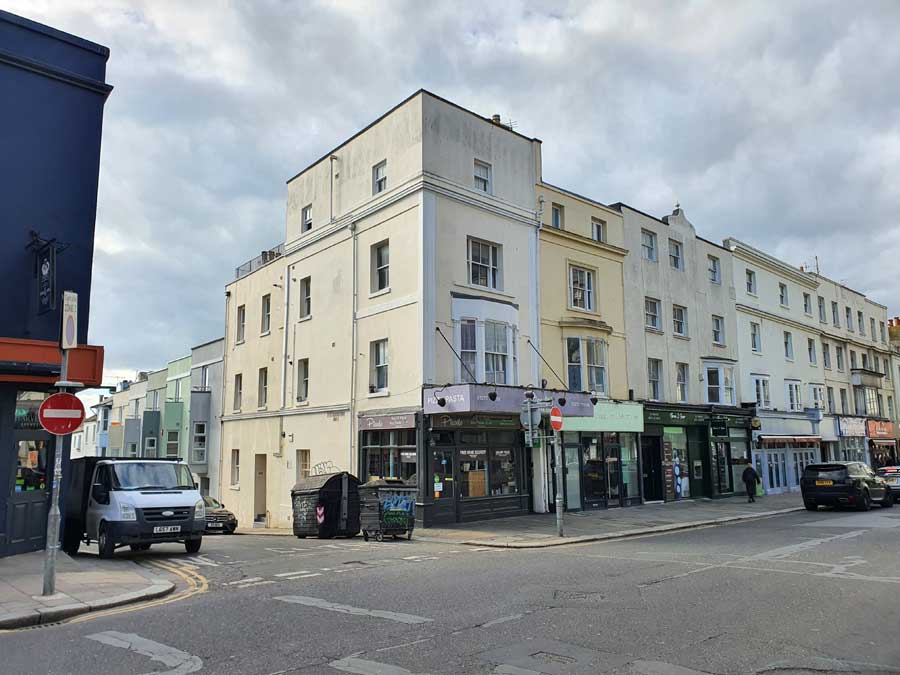
It began its film screening history in 1912 as the Hove Cinematograph, before becoming the Tivoli.
New Venture Theatre, Bedford Place
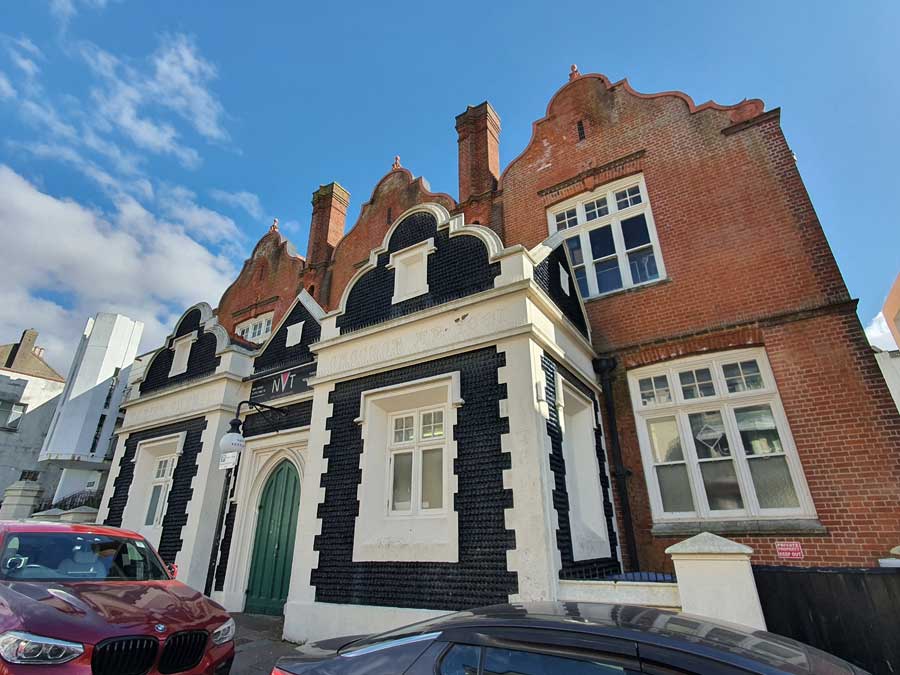
Not every trace of Brighton’s theatrical past has vanished.
This theatre, which took over the old Christchurch Schoolrooms in 1956, is still going strong, staging ten productions a year, and hosting social events, acting classes and workshops.
It’s been expanded over the years and the old stage is now in use as a rehearsal room where, apparently, a ghost still walks.
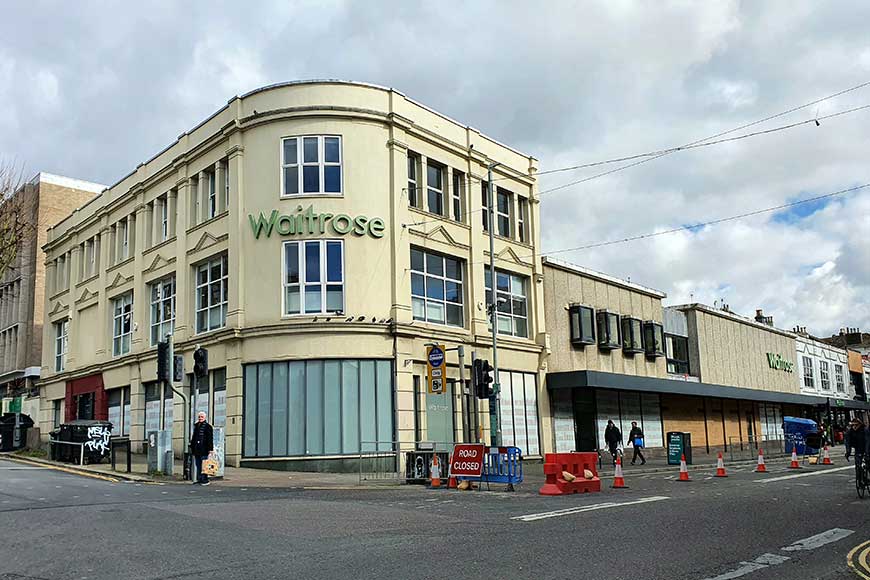
Curzon Kinema

Sad that its elegant frontage has gone forever, replaced by a Waitrose.
It ran from 1907 all the way up to the late 1970s, under glorious names like Electric Bioscope, Queen’s Electric Theatre, Queen’s Picture Theatre, Picturedrome, Scala Cinema, Regal Cinema, Curzon Kinema, and finally as the Classic.
Initially it held just 50 people, but grew to accommodate an orchestra which provided the live soundtrack for silent films.
By the 1930s it held up to 650 people.
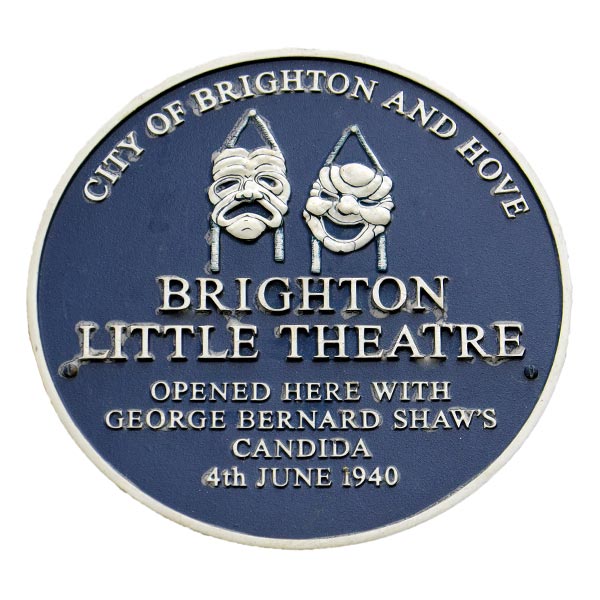
Brighton Little Theatre
Another company that’s still surviving. Run entirely by volunteers, it really does live up to its name, with a capacity of only 71 seats.
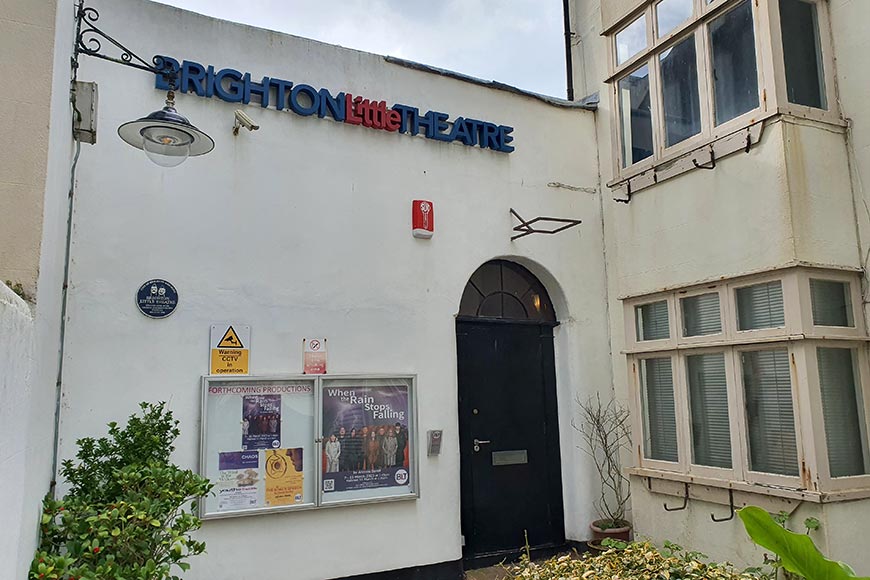
It opened in June 1940, after a few local dramatic societies came together to renovate an old studio. Props were borrowed from friends and relatives, and costumes created from rationed remnants.
The wartime blackouts caused huge problems, often leaving both performers and audience gasping for air in the stifling summer months.
Its most famous discovery was Donald Sinden, who stepped in at the last minute to cover for his cousin, who’d been called up to the RAF. A director of the professional Theatre Royal was in that night, saw Sinden and signed him up on the spot!
The Regent Cinema
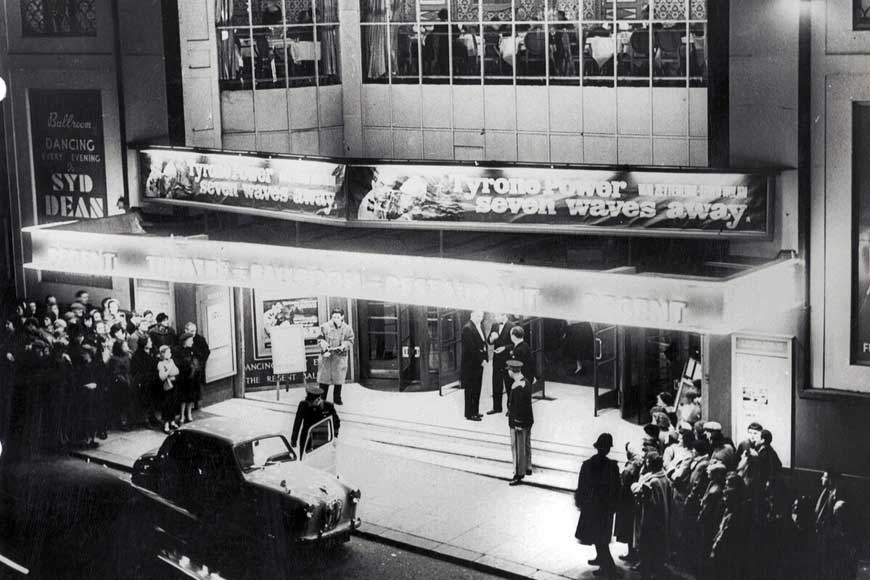
Nothing remains of this pleasure palace, not even a plaque at the side entrance to Boots, on Queen’s Road, where it used to stand in all its glory.
Opened on 27 July 1921, it was a complete entertainment centre with films, restaurant, orchestra, and a fully-sprung dance floor.
Later it installed a state-of-the-art sound system and a Mighty Wurlitzer organ.
The Regent’s last film was Liza Minnelli’s Cabaret in 1973.
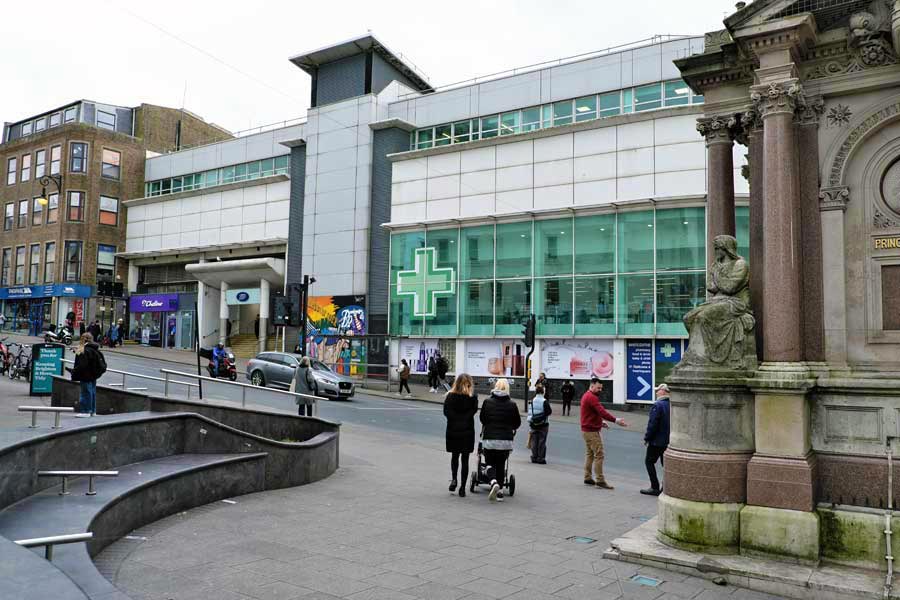
Cinescene, North Street
From 1911 through to 1983 this picture house had a reputation for artsy, foreign and slightly smutty films! Its name changed over the decades from Bijou through Prince’s to Jacey.

It became part of the British Film Institute’s chain, but audiences were low and the BFI withdrew funding in 1978.
It was re-launched as Cinescene in 1979 by Myles Byrne, who already had a reputation for showing slightly risqué films at The Continentale in Kemp Town.
Eclectic, serving badly brewed tea and stale cakes, it was kept afloat by the unexpected box office success of The Draughtsman’s Contract, which played for six straight weeks in 1982.
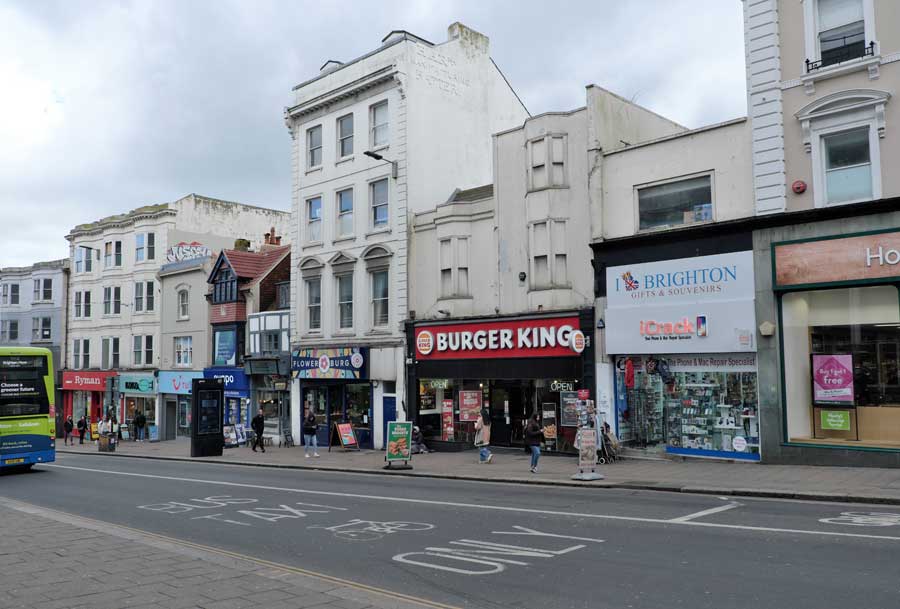
A year later it finally closed, standing empty for years before being converted into a Burger King.
The Essoldo
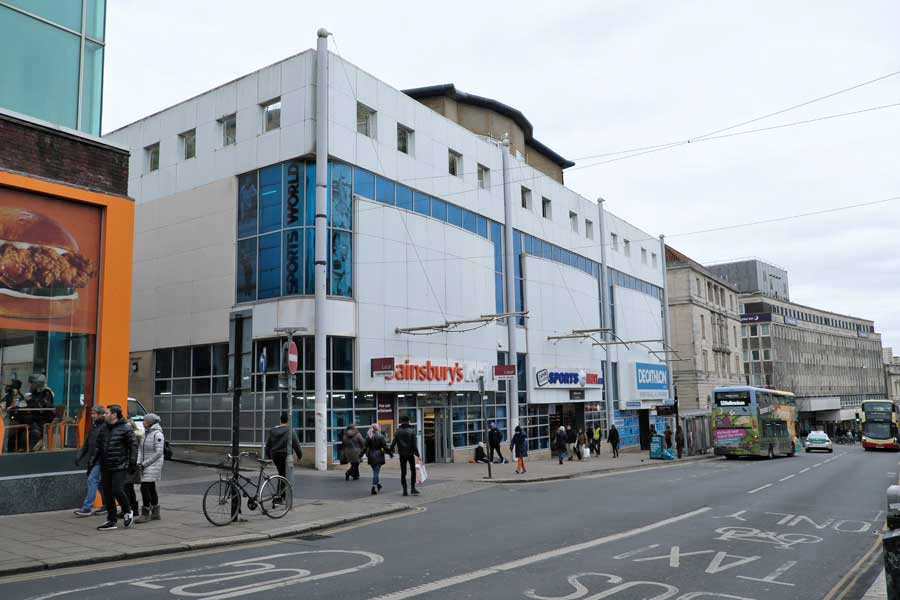
Almost directly opposite, and now Sainsbury’s and Sports Direct, is the former Imperial or Essoldo cinema, one of the last traditional picture houses built in Brighton.
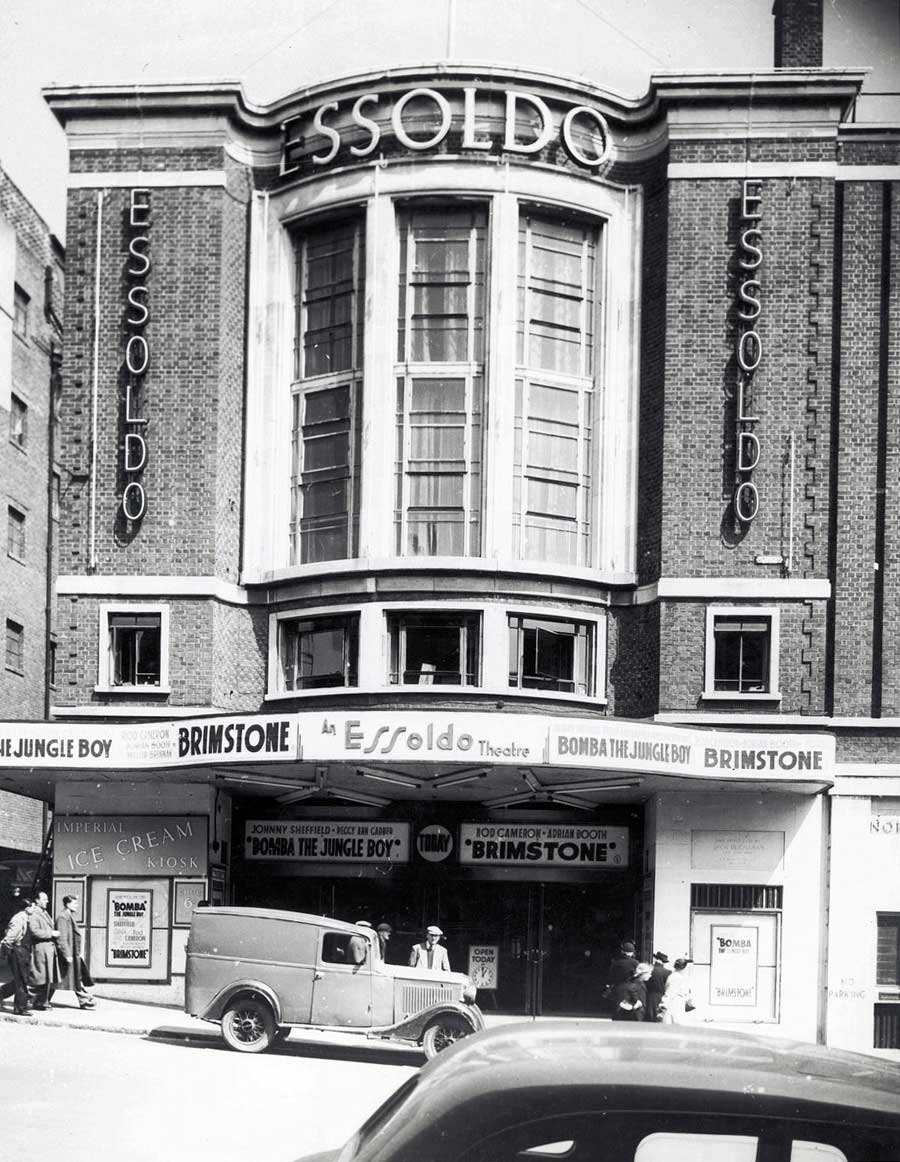
In the 1940s it staged live musical shows as well as films and was quite magnificent, with a 48ft proscenium arch and a 40-foot deep stage. The elegant, Art Deco foyer was accessed from North Street and the interior had a marine motif, decorated with dolphins and cockleshells.
By the mid-sixties it was a Bingo Hall, then a nightclub took over in the late 1990s and were allowed to rip out all the original features.
An attempt to have the building listed failed, and it was demolished in 2001, replaced with huge retail spaces.
The Academy Picture Palace
Take a detour along West Street towards the sea and you’ll pass by the site of a building that once housed the Brighton Hammam Turkish baths, opened 1868. In 1911 it re-opened as a cinema billed as the ‘largest, loftiest, best-ventilated and most luxurious’ and the second cinema in Brighton to be converted to talking pictures in 1929.
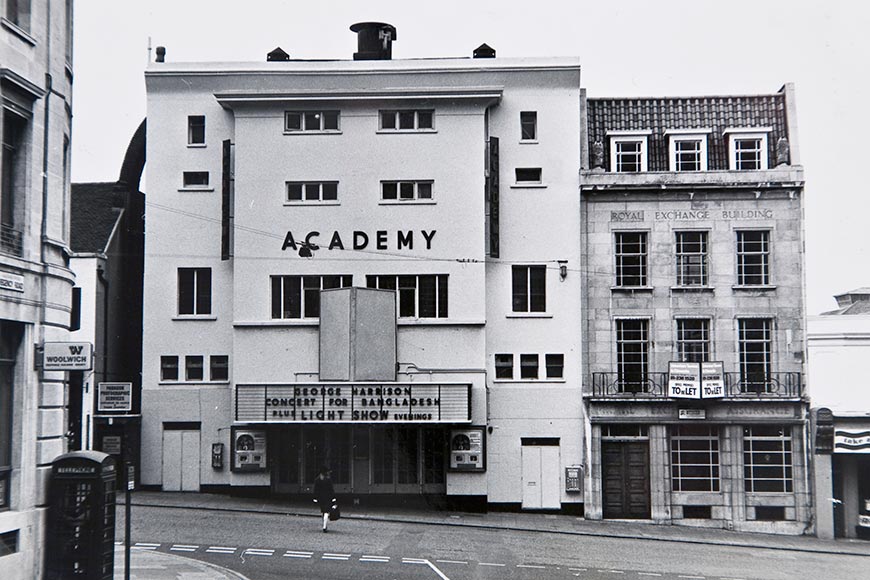
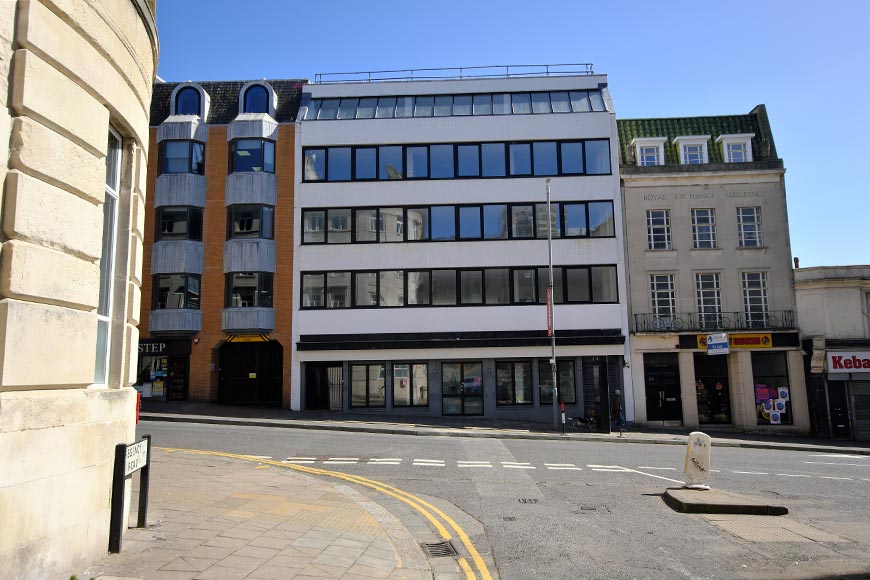
For a short time it was known as the Tatler, but for most of its life it was The Academy until it closed in 1973 and demolished a year later.
It’s now a modern office block.
The Brighton Hippodrome
We’re dipping into the historic Lanes next as we are well into Brighton’s stage-and-screen land.
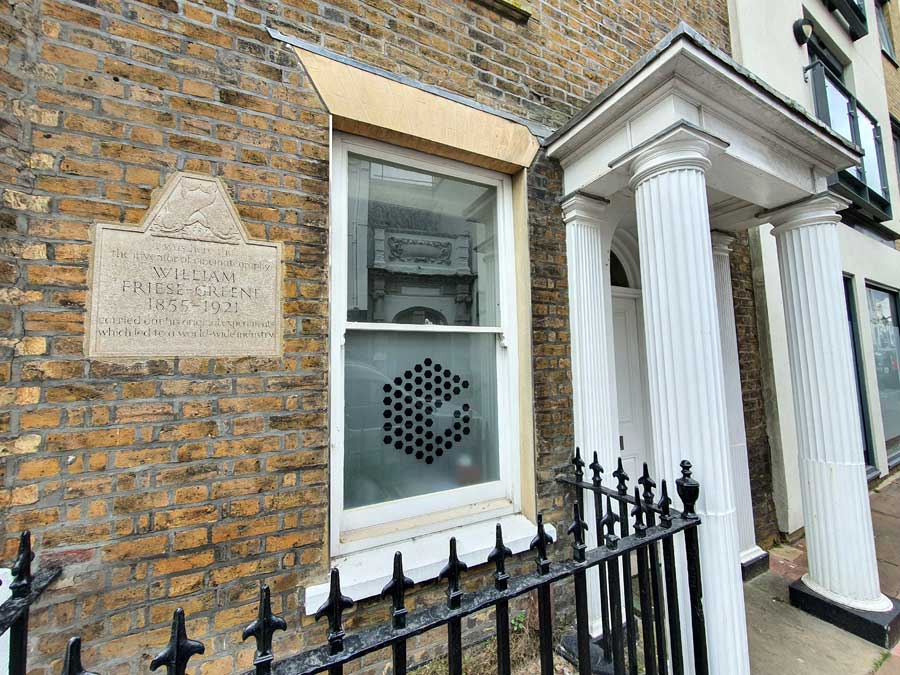
At 20 Middle Street, you can see a plaque highlighting where William Friese-Greene opened a film laboratory in 1907. His successful experiments led to him being credited as ‘the inventor of cinematography’.
Directly opposite is the old Hippodrome, home of family entertainment.
First an ice rink, then a circus – complete with elephants, one of whom got free one day and roamed the nearby streets, snacking on buns from passers-by – followed by a variety theatre.
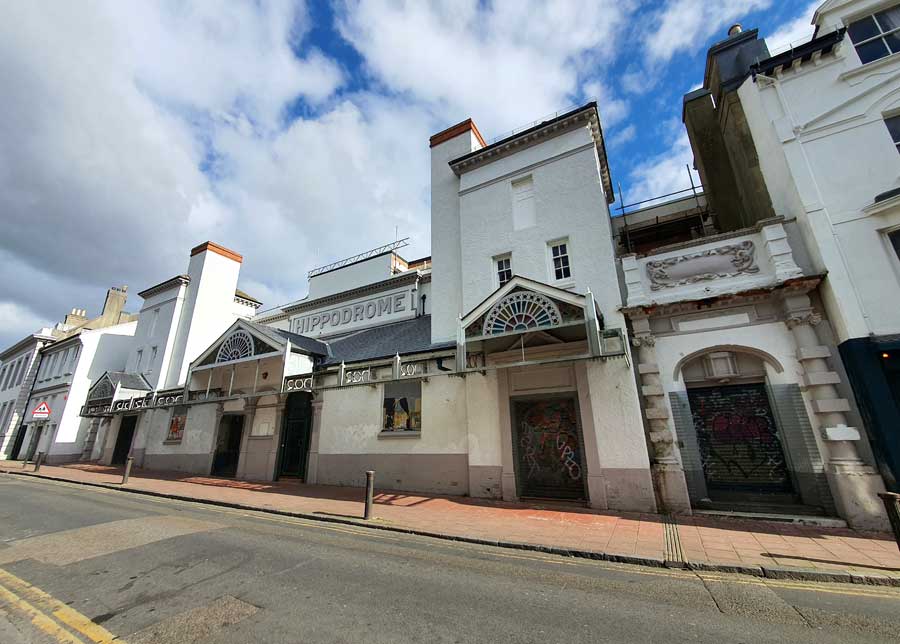
Over its 67-year history the Hippodrome saw performances from Brighton’s own Max Miller, Buster Keaton, Laurel and Hardy, Laurence Olivier, Gracie Fields, Sammy Davis Junior, The Beatles, The Rolling Stones, Morecambe and Wise, Shirley Bassey, and finaly Chuck Berry before closing in 1964. Only to re-open 3 years later as a bingo hall before closing completely in 2006.
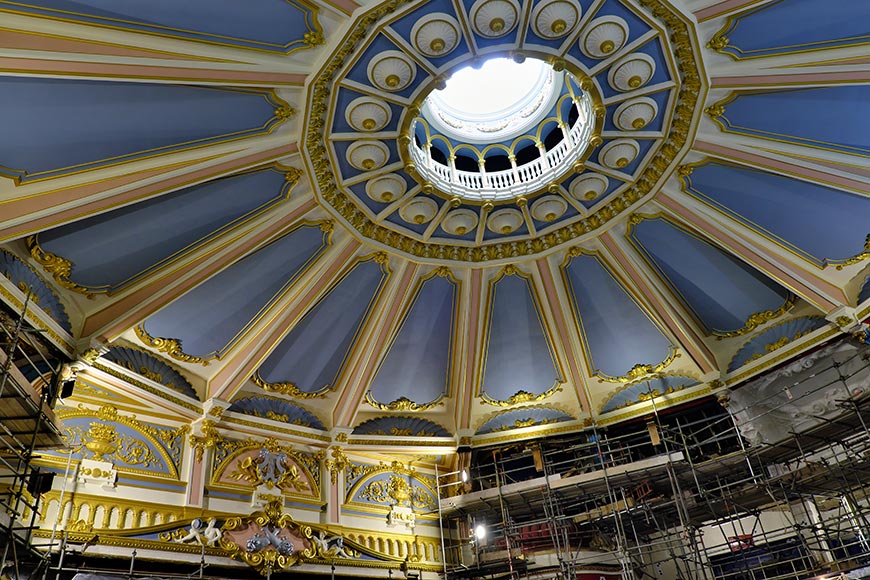
But you can’t keep a good hall down! Now the Hippodrome is slowly being restored and the auditorium, with its blue and gold ornate ceiling, looks terrific. The idea is to turn this Grade II listed building into a mixed-use development that will include a performance space, hotel, bar, and members’ club. The planned re-opening is in May 2026.
The Savoy
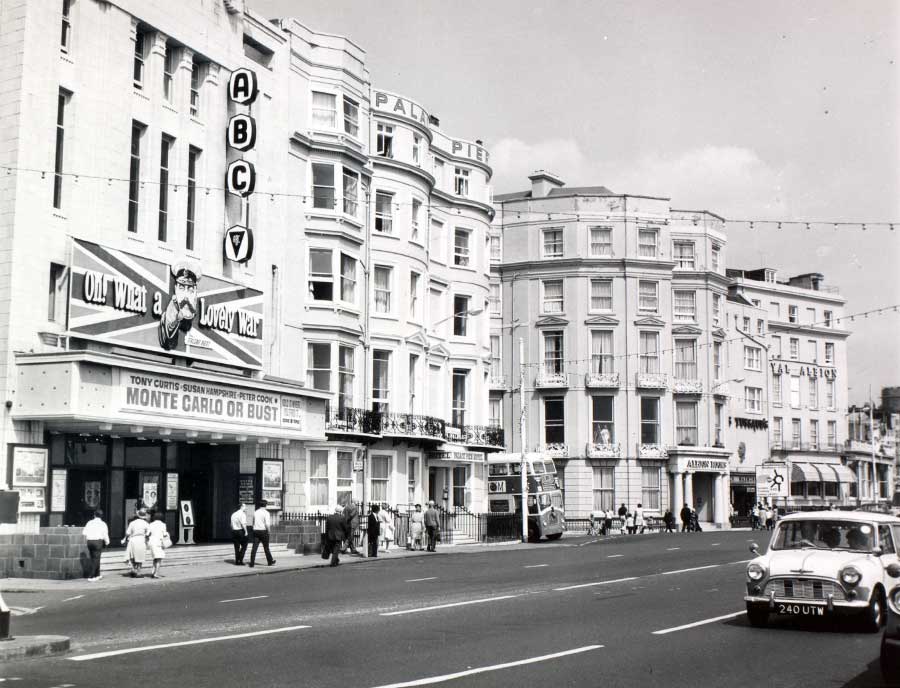
The cinema with an entrance on East Street and another on Grand Junction Road, it was known as ABC in my youthful days, but has a history that goes back further than I do!
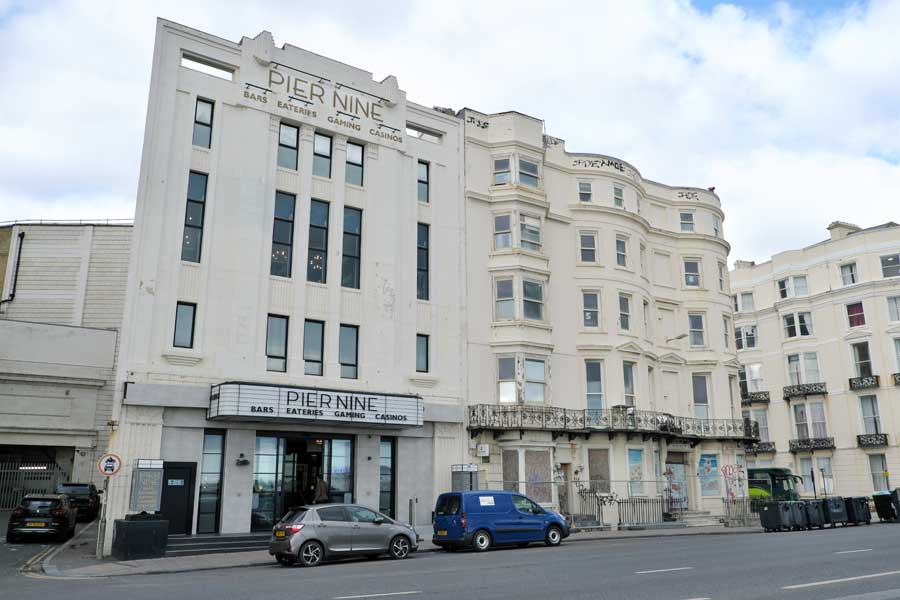
At midnight on 8 January 1948, The Savoy screened the world premiere of Brighton Rock, the film based on Graham Greene’s novel set in Brighton.
And it kept on showing big screen hits until it closed in 1999.
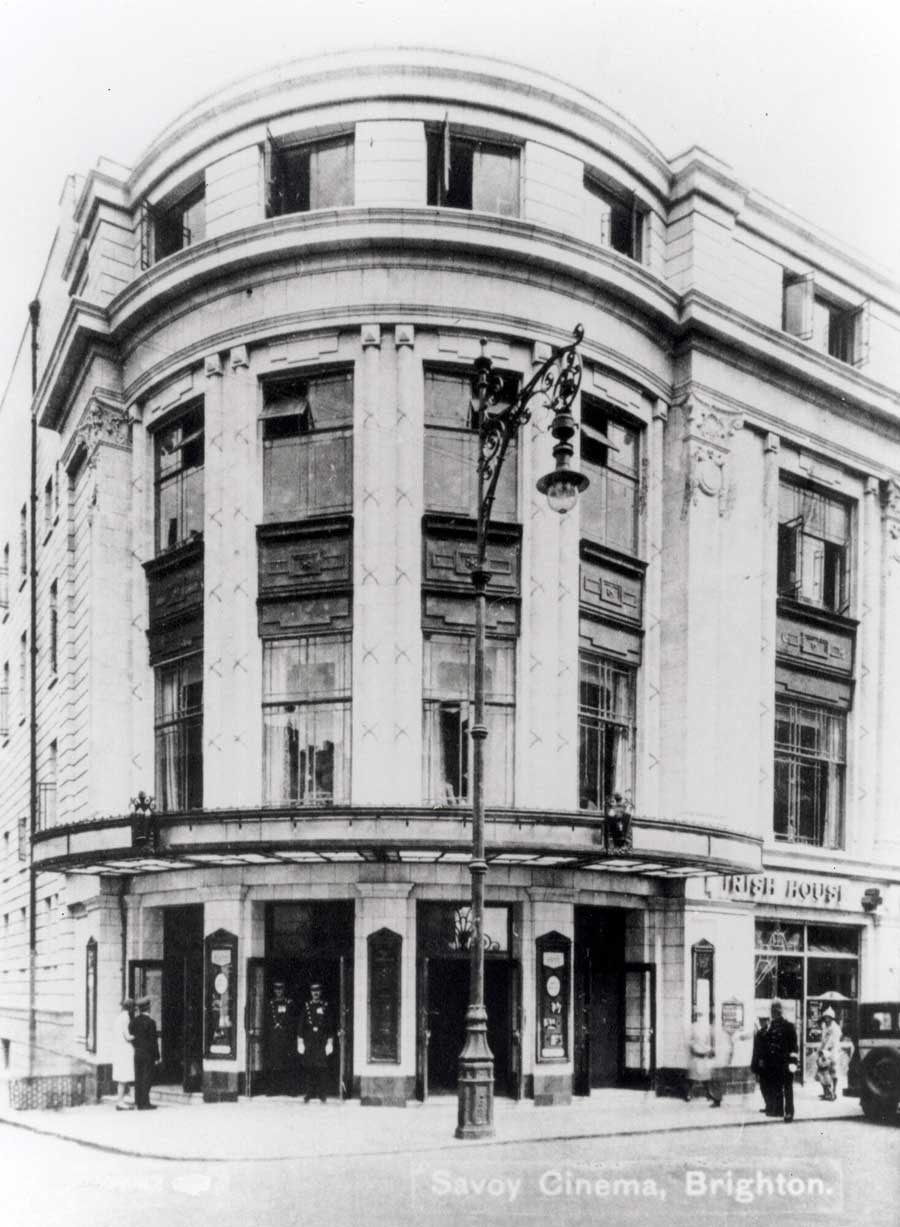
On the way there, drop in to Quadrophenia Alley, named for the Who’s epic film, which has a connection to the Savoy too. In May 1964, the cinema’s windows were smashed by the Mods and the Rockers during the legendary Whitsuntide riots; the cinema played a cameo role in Quadrophenia as the fight was re-staged for the cameras.
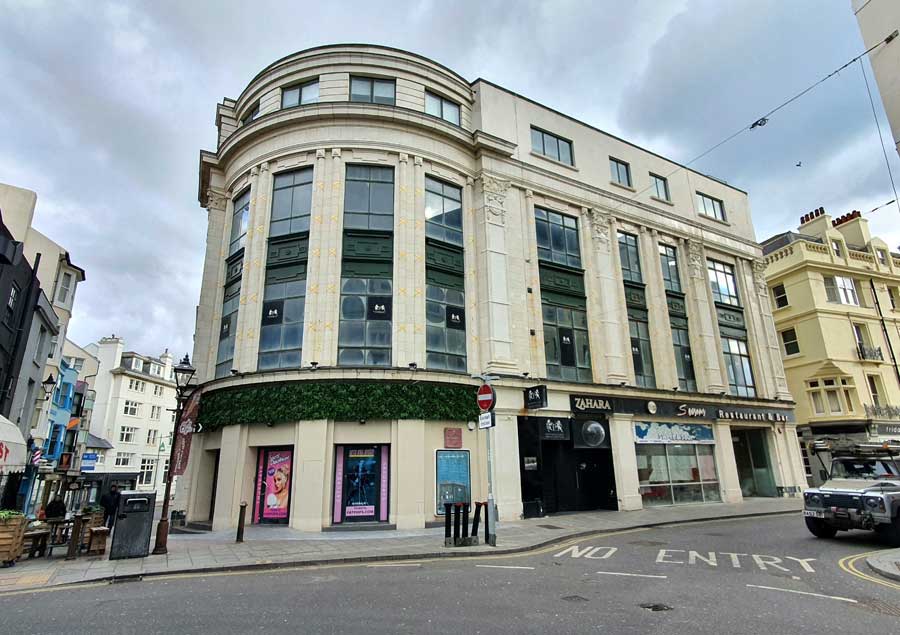
The Marlborough
Brighton has a reputation as an artsy place, even outside its 3-week Festival every May, and many pubs, clubs and cafés boast a performance space.
The Marlborough – now called Actors – is one of the oldest, with an upstairs theatre room dating from Regency times.
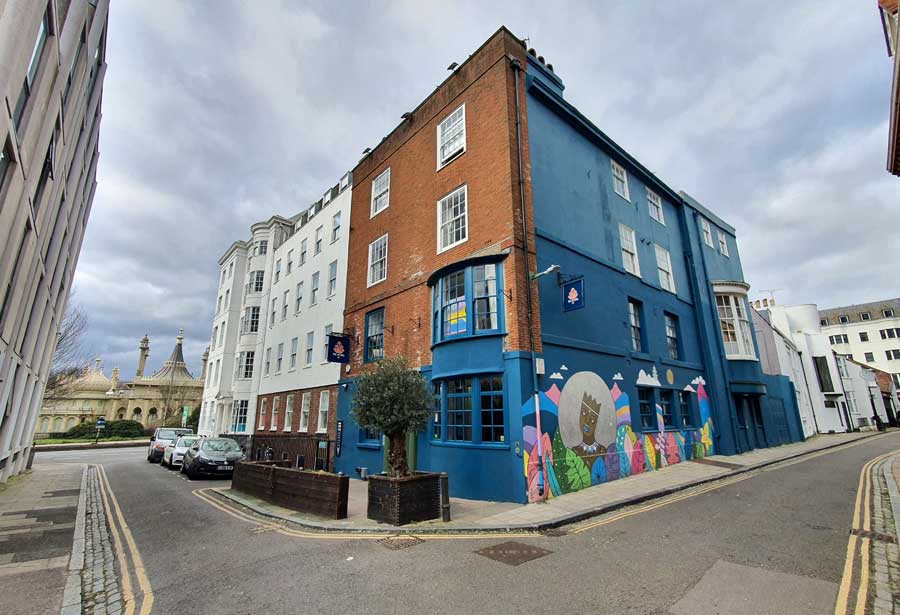
It’s also reputed to have once been a brothel, patronised by the Prince Regent, although claims there’s a secret tunnel from its basement to the nearby Pavilion are hotly disputed!
In the 1970s and 80s it hosted the Brighton Campaign For Homosexual Equality, and today it’s a known safe space for the LGBTQ community.
The Astoria, Old Steine
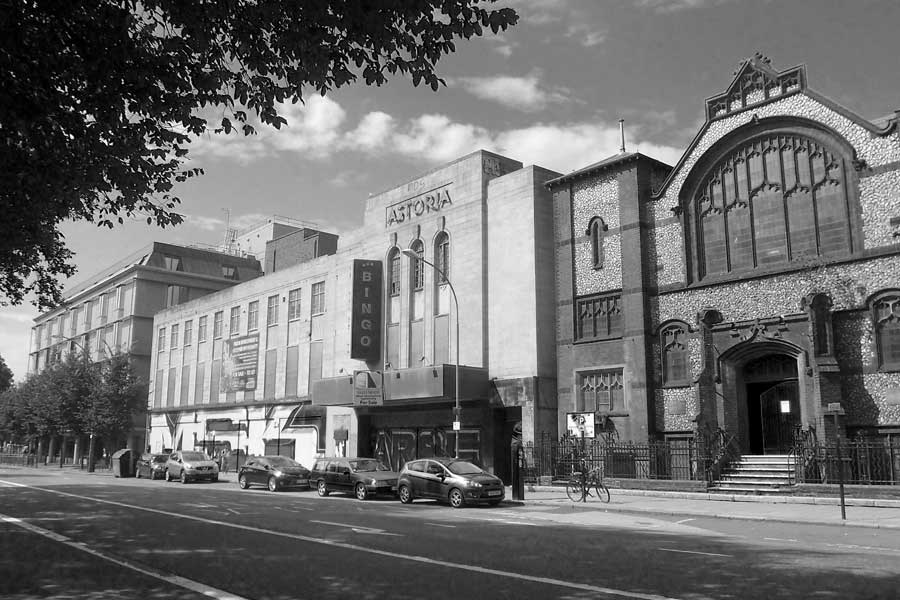
This is a real travesty. An art deco building, vibrant and much loved for many years, and Grade II listed, bulldozed for a block of luxury flats and town houses.
The great and the good were at its opening in December 1933 to see a Pathé newsreel and The Private Life of Henry VIII, starring Charles Laughton. It sank a little after that, becoming known for B movies until it showed Gone With The Wind in 1939, one of only a handful of cinemas outside London to screen the classic.
A refurb in the late fifties made it even more popular, and it continued to show blockbuster movies until it closed in 1977 and became a bingo hall.
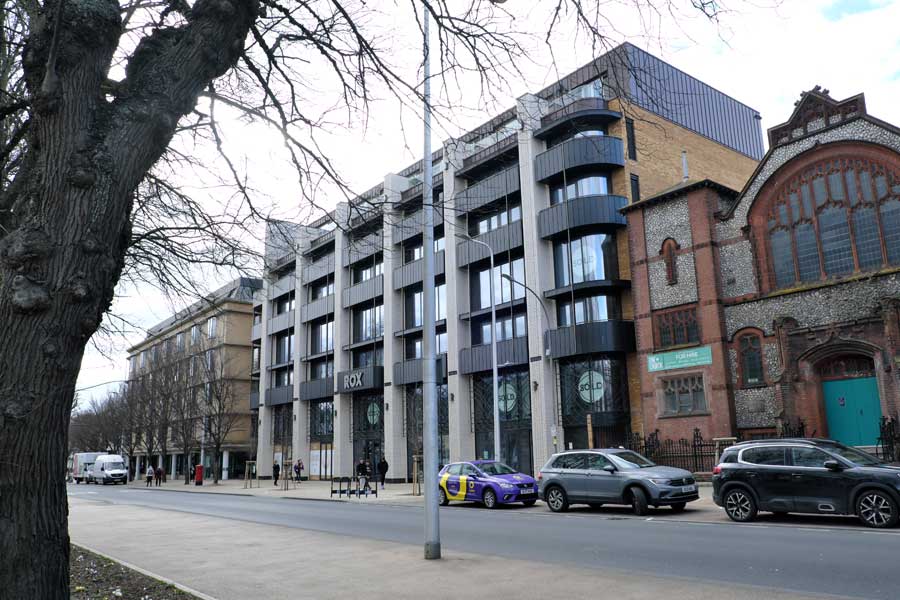
I’m sure the people who move in to the ROX development will love it, and its busy city centre vibe, but such a shame to see a Grand Old Lady of cinema go.
The Duke of York’s Picturehouse
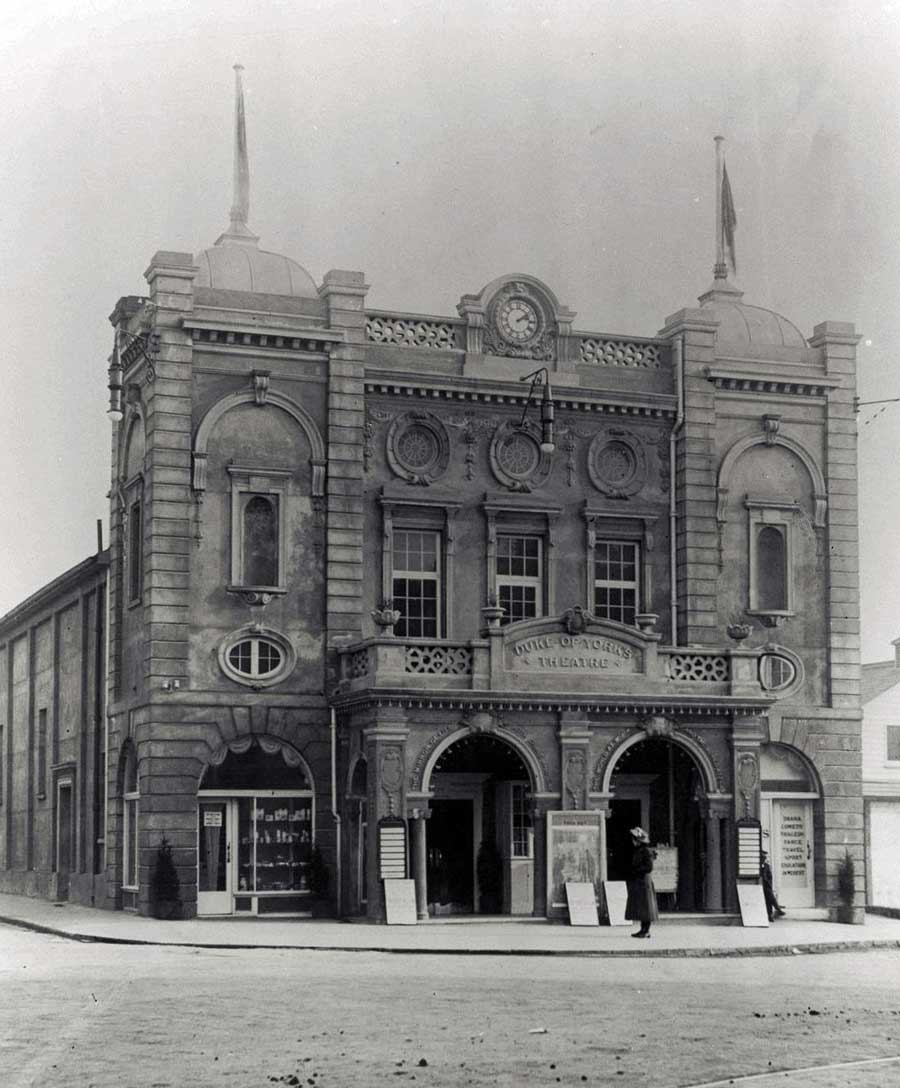
Worth straying from the QueenSpark route at this point to walk further up London Road until you see the high-kicking, black and white striped legs above the Duke of York’s next to Preston Circus Fire Station.
Opened in 1910 by former actress, Violet Melnotte-Wyatt it’s still going strong and is even equipped for 3D screenings.
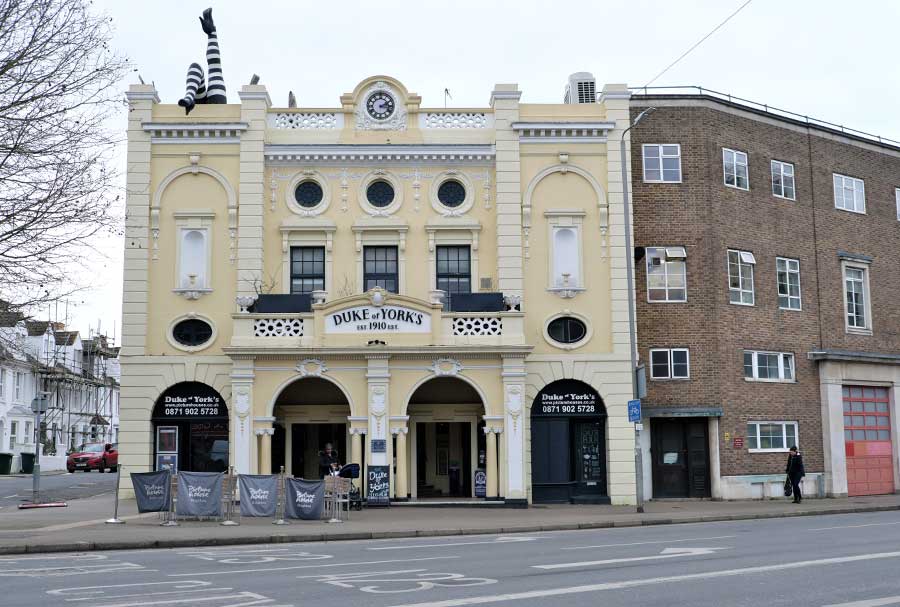
Now a Grade II listed building, it is almost certainly Britain’s oldest surviving purpose-built cinema in continuous use.
Coronation Cinema
Retracing your steps brings you back past the ex-Astoria and on to North Road, where there’s a tiny building at number 104 which used to house the Coronation Cinema.
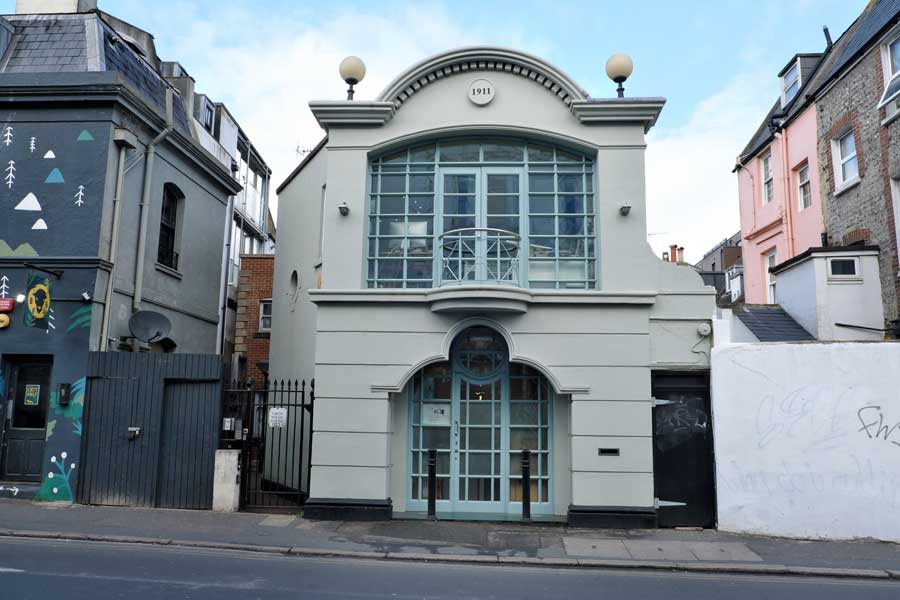
It was in operation from 1911 to 1939 under a variety of names. Redeveloped in 2001, the auditorium has been demolished, but the facade has been remodelled to retain much of its original look and feel.
Theatres in New Road, Brighton
You’re now coming to the end of the route, which winds up in what is loosely described as Brighton’s cultural centre.

The Komedia in Gardner Street is always buzzing, with its comedy, music, cabaret and club nights.
The Dome on Church Street, originally the Prince Regent’s stables, was converted to a concert hall in 1867 and screened films in the 1920s.
Its organ, still in use today, dates from 1936 and was tailor-made for the venue. It even has a few sound effects!
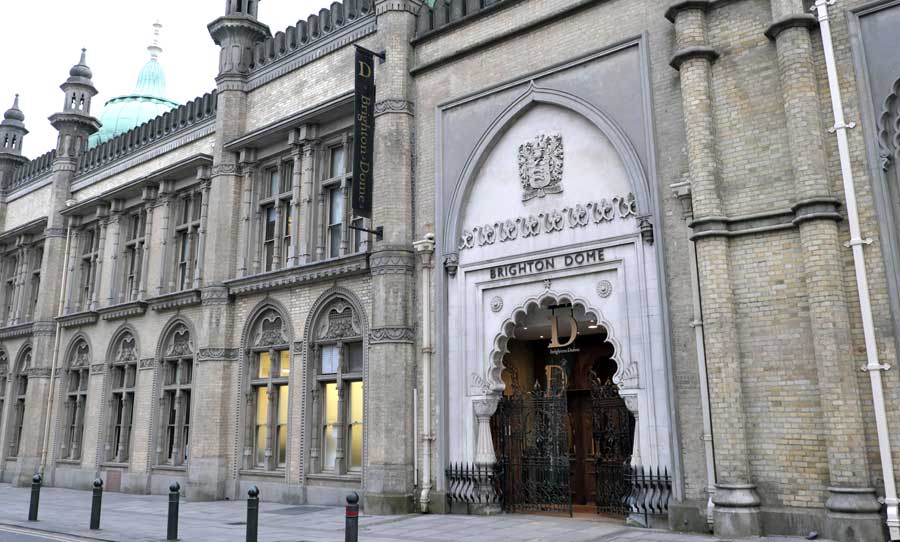
A major claim to fame is the staging of the 1974 Eurovision Song Contest when ABBA burst onto the music scene with Waterloo and stars like David Bowie, Stevie Wonder, Ella Fitzgerald, Count Basie, Jimi Hendrix, Pink Floyd, Bette Midler, and Nina Simone have graced its stage.
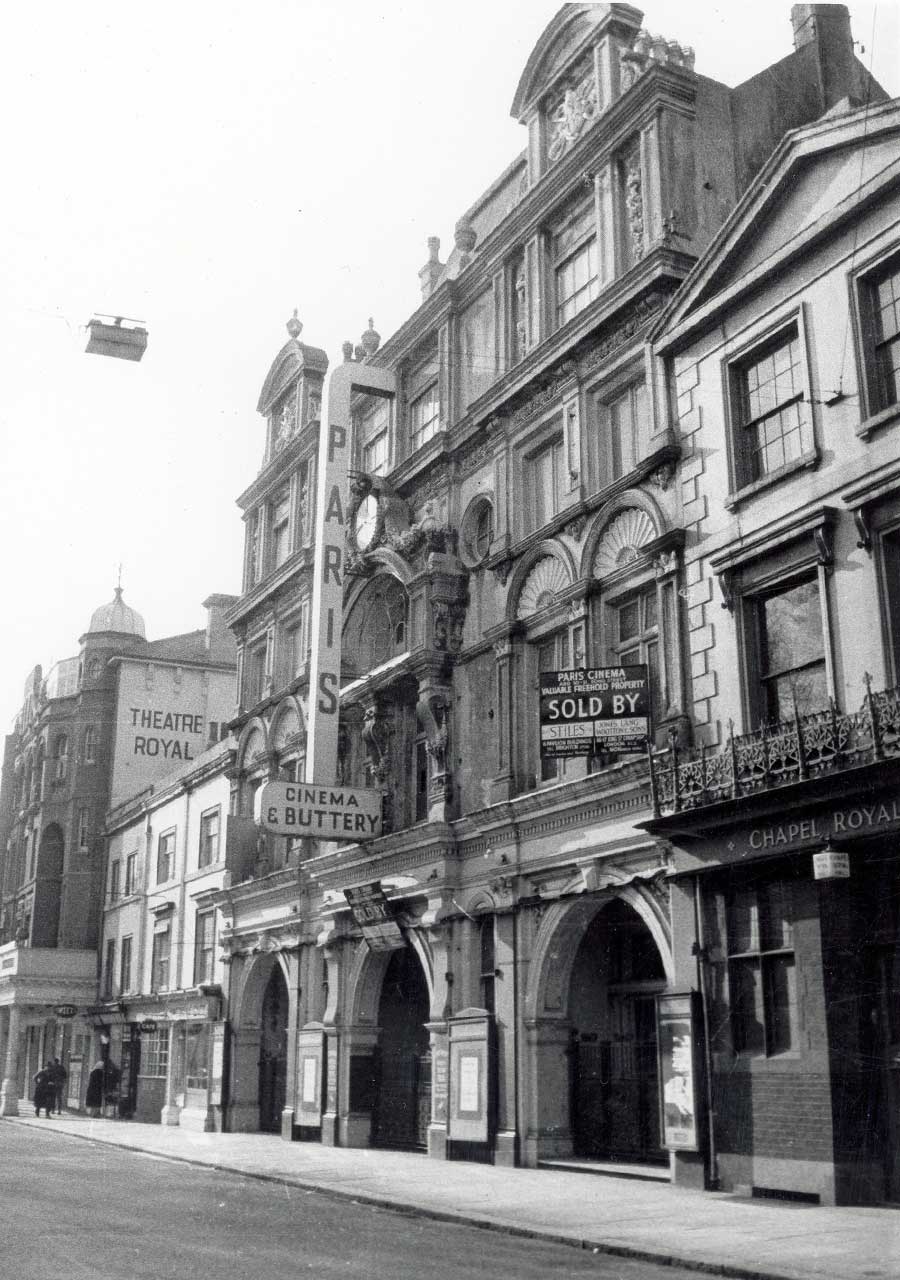
In nearby New Road, you will pass the site of the old Court Theatre/Paris Cinema, which opened and closed regularly from 1896 until the mid-1960s, when it was demolished. The site is now a modern office building.
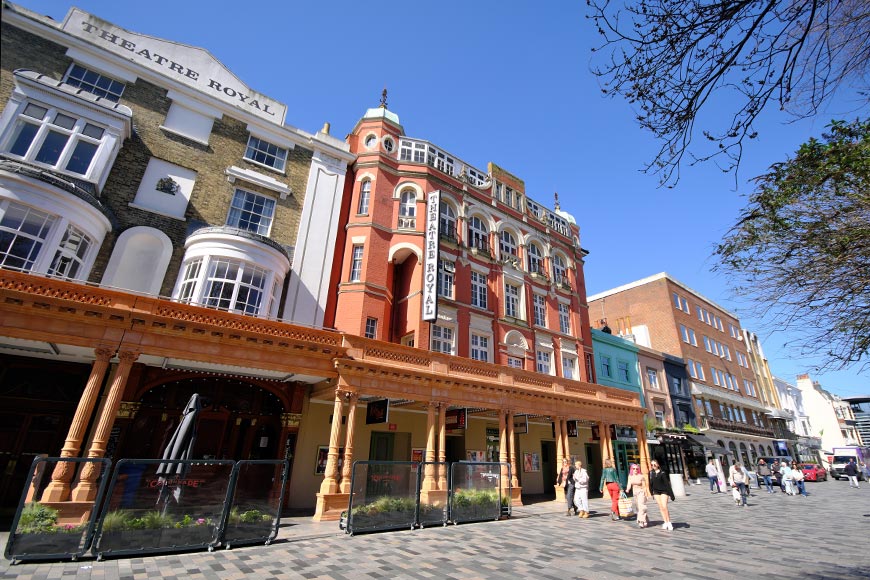
Thankfully, the Theatre Royal remains true to its past and still very much in operation.
It was established in 1807, specifically to entertain the Prince Regent, his lover Mrs Fitzherbert and the crowned heads of Europe.
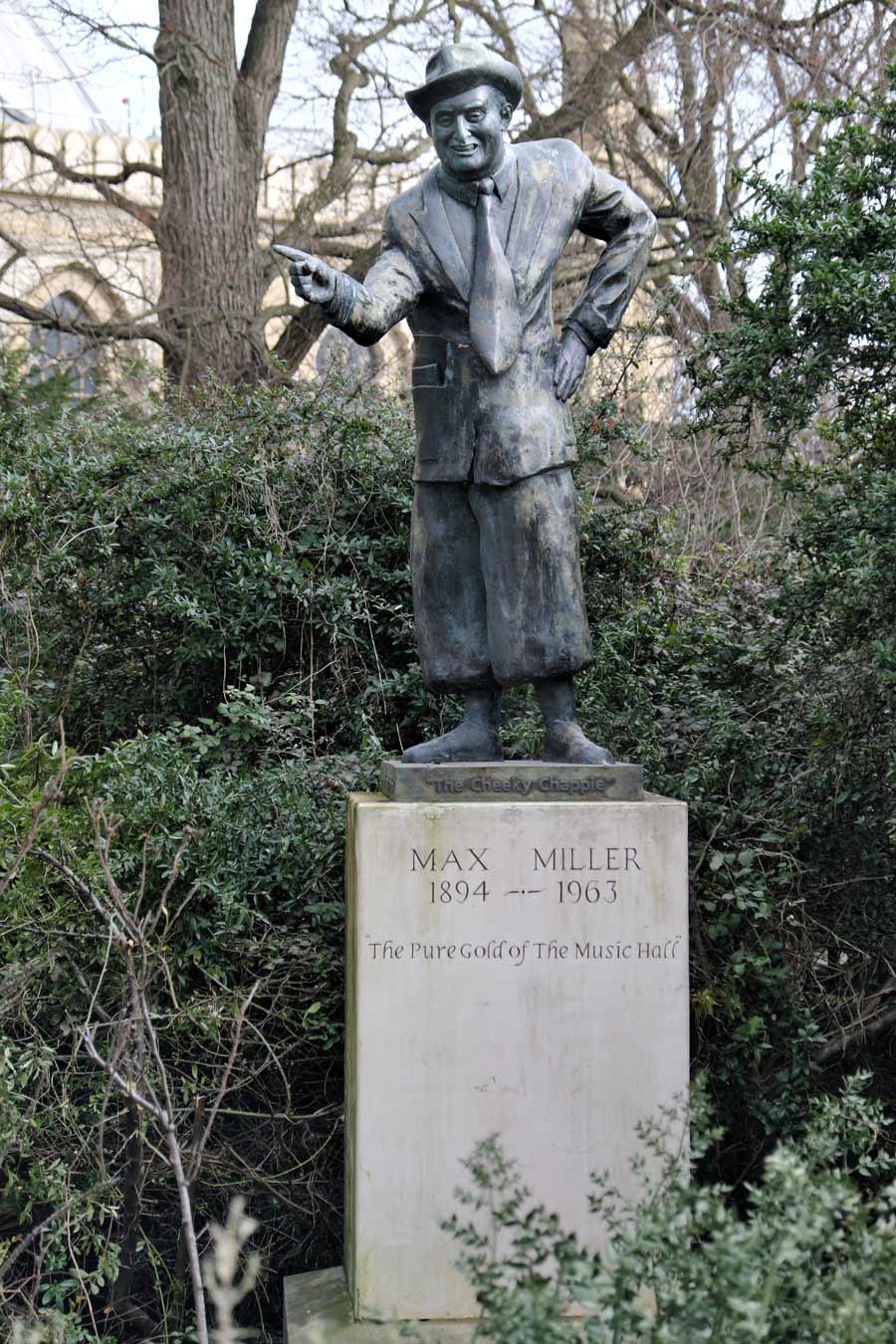
At the entrance to Pavilion Gardens you’ll see a statue of Max Miller, the Brighton-born cheeky chappie who wowed Music Hall audiences for decades.
Here’s where the QueenSpark walk ends, but you can carry on sleuthing Brighton’s artsy past for yourself.
There are traces of old cinemas and theatres right across the city, from the saucy seventies shows at VOGUE on Lewes Road to the Saturday matinee sixpenny seats at The Rothbury in Portslade.
And Finally, Did You Know?:
• Hove is home to the Oldest Surviving “Blue” Movie: In 1896, a risqué film titled ‘A Victorian Lady in Her Boudoir’, credited to Brighton-based pioneer Esmé Collings, was filmed in Hove.
• Brighton’s iconic locations, such as the West Pier’s skeletal remains, have been featured in various films, and the city stars in modern TV shows like Peter James’ Grace.
• Hove Museum’s Film Gallery houses a dedicated film section, showcasing the area’s significant contributions to early cinema plus some interesting old movie cameras and film projectors.
• The first film show in Brighton took place at the Pandora Gallery, opposite the West Pier, in March 1896. A plaque to mark the event can be found at the Pinello Restaurant that now occupies the site.
• The peak film era was between 1937 and 1939. Brighton reached its cinematic peak with 17 cinemas in operation, with an additional five in Hove and Portslade.
Want to know more about Brighton’s cinema history?
Get all the facts and figures from the Brighton Cinema Directory
And if you are interested in Shoreham by Sea’s film history read our 9 reasons not to bypass Shoreham or visit The Marlipins Museum in Shoreham for exhibits on the early film industry, including the Shoreham Beach film studio.

Where to next?
• Brighton Tomb Trail
• Famous UK film locations
• Seven Wonders of Worthing
Disappointed no mention of The Academy Cinema . A former bath house. My Dad was manager until 1969 when we moved away.
Hi Paul, thanks for your suggestion to add The Academy, which we have now done.
If you have any special memories you’d like to share, we’d love to hear them.