
As we were going to St Ives ….
No we didn’t meet a man with seven wives, but we did pass the time of day with dog-walkers, narrowboaters, cyclists, hikers and history-lovers.
Because St Ives – the one in Cambridgeshire, not Devon – is an ancient market town with a long past, links to Cromwell and beautiful countryside.
We based ourselves in the village of Hemingford Grey, a quiet place, on the River Great Ouse, perfectly positioned for a gentle stroll.
So instead of jumping in the car to visit St Ives, we pulled on our boots and stepped out.
Not so much a circular walk, more a triangle.
And on a warm, summer’s day, with bees buzzing and birds singing, you might almost call it a golden triangle between St Ives, Houghton and The Hemingfords.
Hemingford Grey
The village, and its twin Hemingford Abbots, are about three miles, and a whole unspoiled world away, from Huntingdon. Imagine thatched cottages, narrow streets, old churches and a pub.
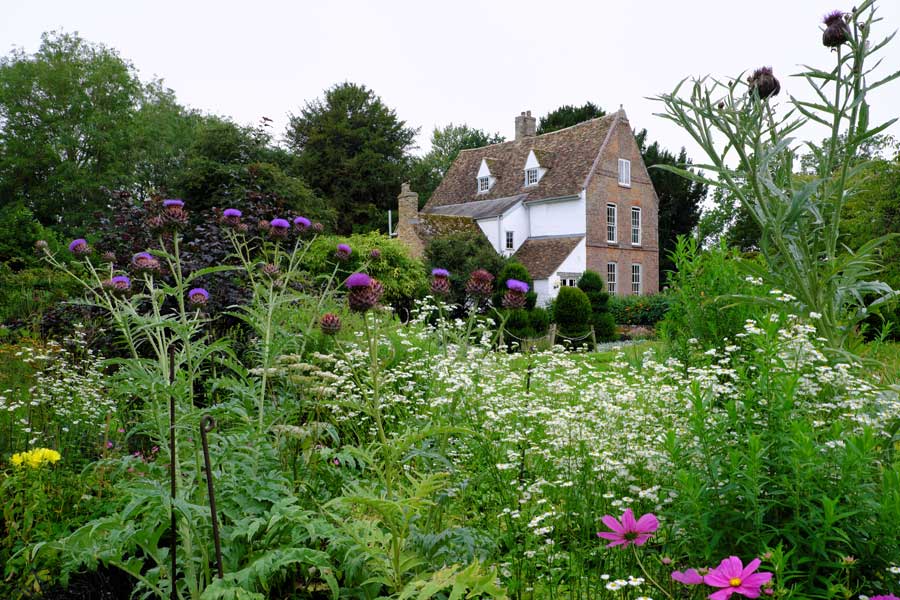
The main attraction in Hemingford Grey is The Manor. Dating from Norman times it was the inspiration for writer Lucy M Boston’s Children of Green Knowe series. We love the place and you can read about our experiences here.
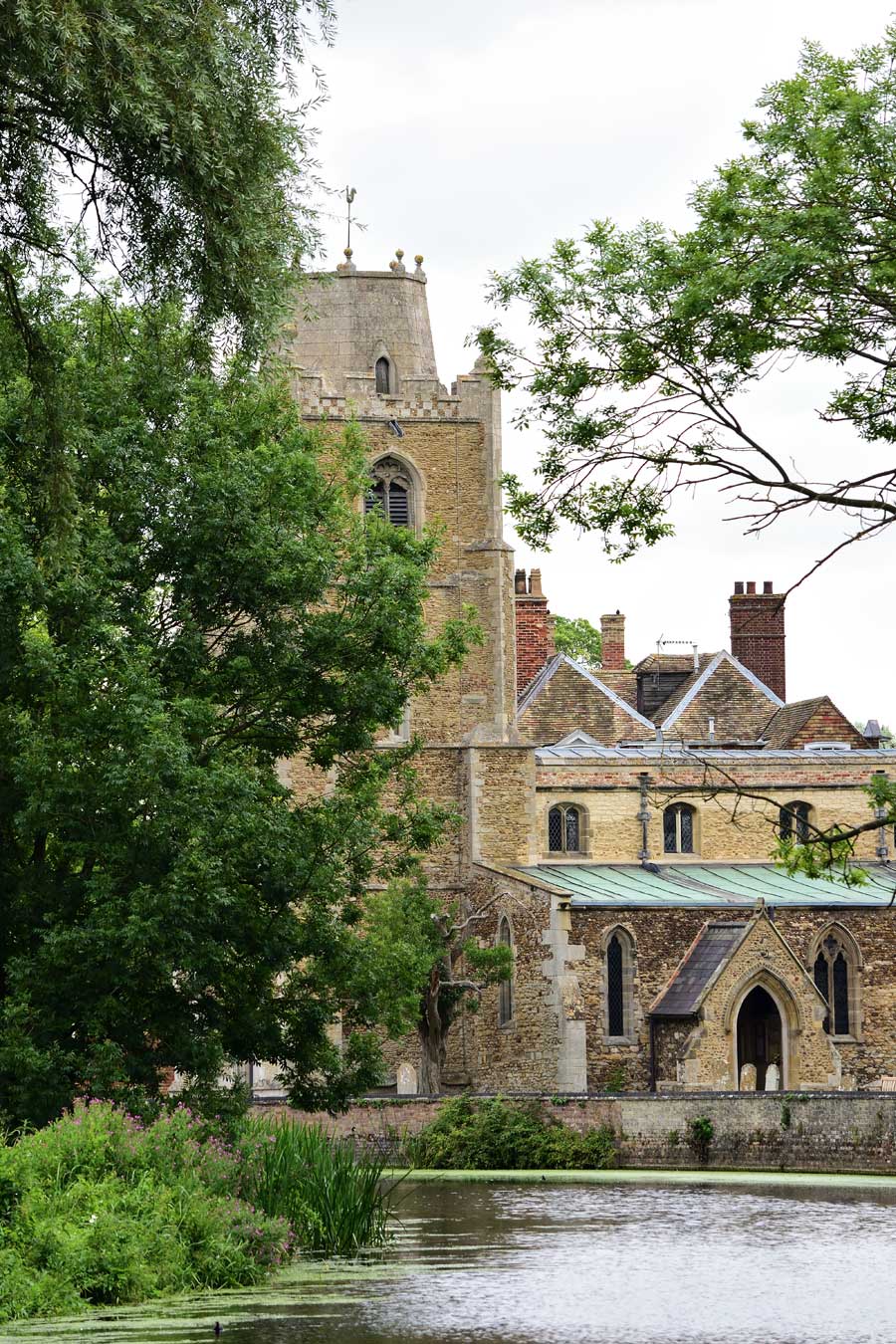
Overlooking the river stands the medieval St James’ Church, built in 1160 possibly by Payne de Hemingford, the same man who had built The Manor in 1130.
The pace of life is slow, the river gentle (although prone to some spectacular floods) with the quiet only broken by the throbbing sound of a narrowboat engine and cows mooing. It’s a good place to start your walk.
There are plenty of signed paths, but only one river crossing, at Houghton, so the best approach is to walk through Hemingford Abbots, past the pub and turn right into Meadow Lane.
At this point, and if you like churches, make a detour when you reach the Axe and Compass pub to visit Saint Margaret of Antioch. A church has stood here since at least 1086, and it’s mentioned in the Domesday Book.
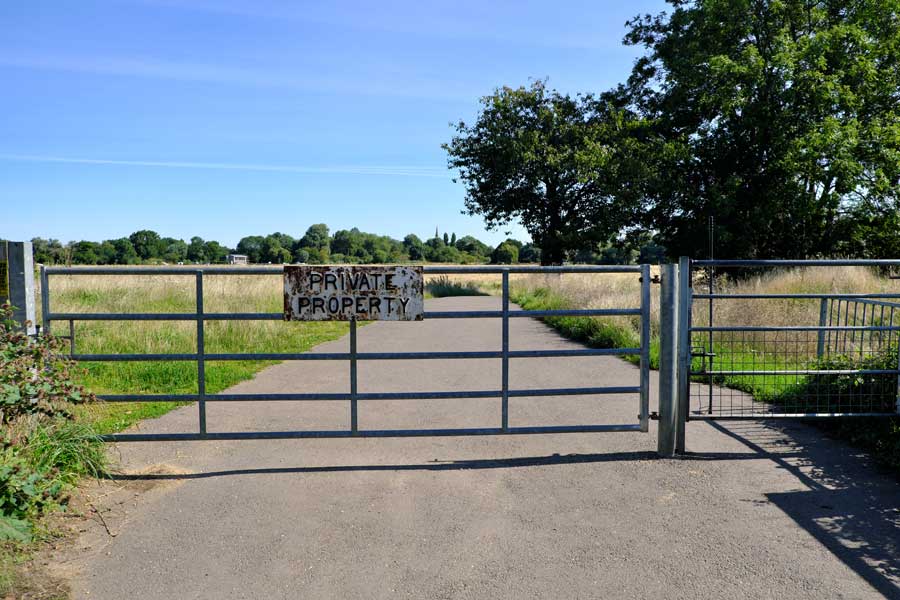
Further along Meadow Lane you’ll cross The Black Bridge, a bailey bridge over one of the river’s many tributaries and on to the wide, tarmac path across the meadows, towards Houghton. You’ll see plenty of ‘Private Property’ signs but these don’t apply to the main pathway, they’re just a reminder that the fields either side are actively farmed.
Snackattack
The Cock in Hemingford Grey and the Axe and Compass in Hemingford Abbots both do good pub food. But be aware they keep country hours in this part of the world. Both pubs close on Mondays and the Axe and Compass is closed on Tuesdays too.
Houghton Mill
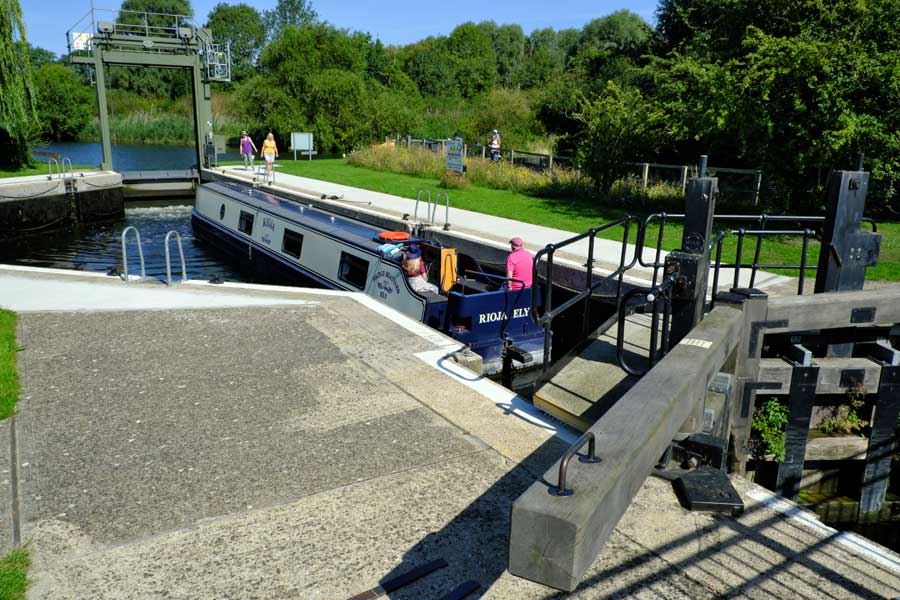
Just after the lock gates, where we’d idled the time away watching a variety of boats pass through, dodging swans who’d taken up residence at the side of the path, long necks stretching out to nibble the ankles of passers-by, we came to Houghton Mill.
There’s been a mill here for centuries, the earliest records date from 974CE when it was given to the newly established Ramsey Abbey. That meant local farmers were forced to bring their grain to the mill and the monks would reap the profits.
But that came to an end in the 1530s in the dissolution of the monasteries when everything was taken over by the Crown. Not much remains of the once-prosperous Abbey but the mill was much too valuable to the local economy and survived.
By the 1850s Houghton Mill was producing a tonne of top-quality flour per hour, which was sold as far away as London and Leicester. And that’s what’s been carefully preserved today by the National Trust.
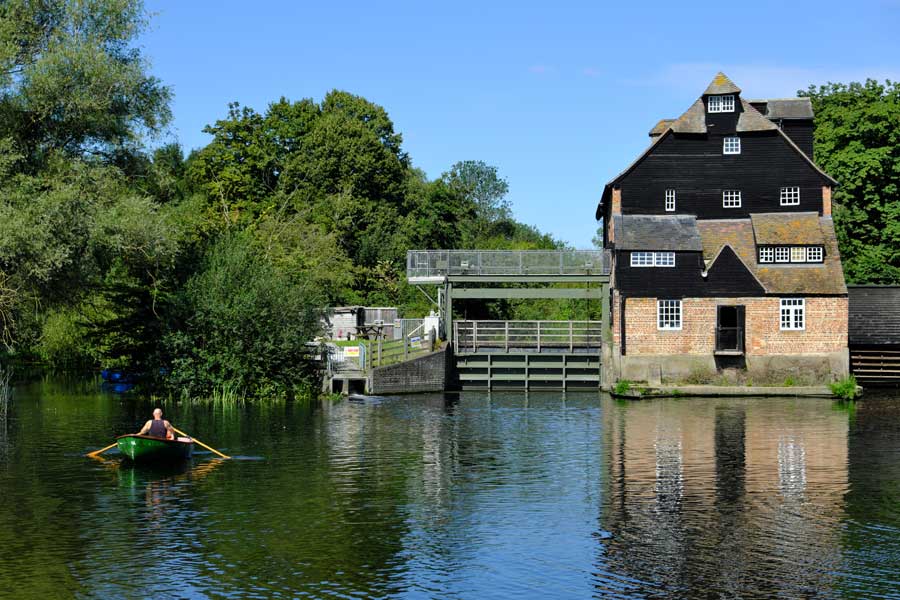
You can stroll round the outside of the mill for free, paddle in or picnic by the mill pond or rent a boat.
But if you want to know more, the hour long guided tour of the interior is a must.
Huge millstones, old timbers, Victorian speaking tubes and volunteer millers who every Sunday still grind wheat to make flour.
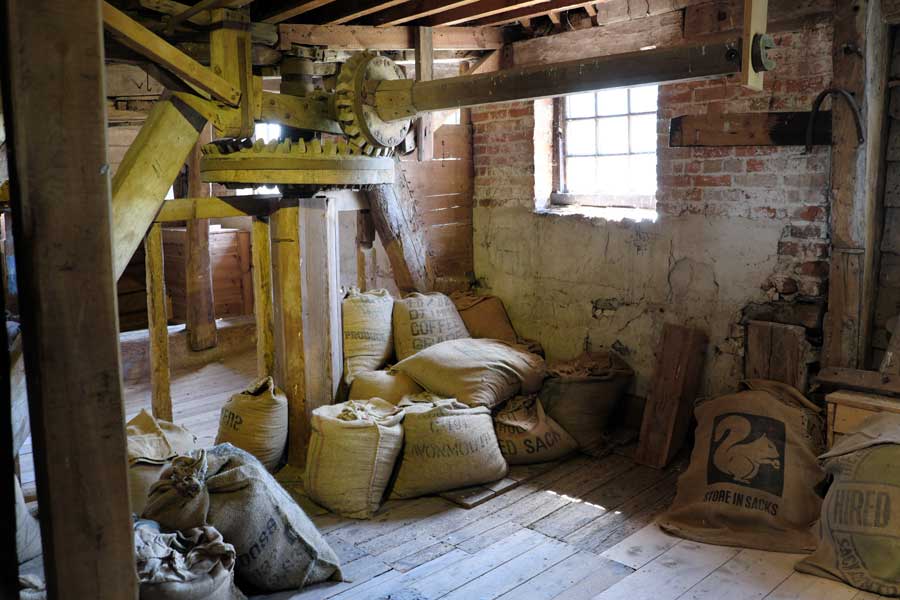
Sadly, since the enforced idleness of Covid, the old water wheel doesn’t turn (they are looking at ways to restore it to working order) so at the moment they use electricity to power the grinding stones. But the system is still as it would have been when Potto Brown and Joseph Goodman made their fortunes.
Walk away from the mill towards the village and you’ll see more of Potto.
He was a Houghton man through and through, funding local schools and churches, and there’s a statue of him in the village square.
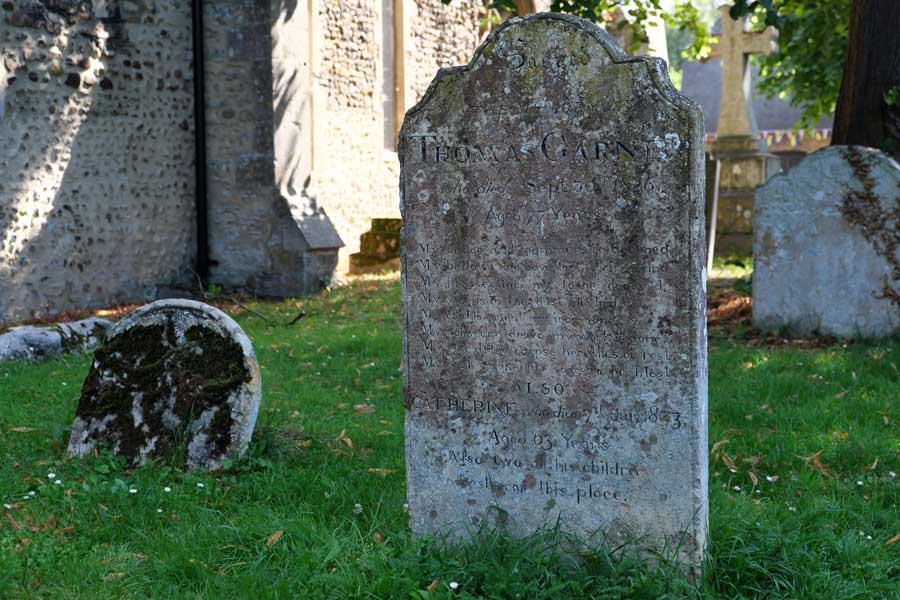
And don’t miss the well weathered gravestone just by the porch entrance to St Mary’s Church, with its poem in memory of the local blacksmith, Thomas Garner.
My sledge and hammers be declined
My bellows too have lost their wind
My fires extinct, my forge decay’d,
My vice is in the dust all laid.
My coal is spent, my iron gone,
My nails are drove, my work is done.
My fire dried corpse here lies at rest,
My soul smoke-like soars to be blest
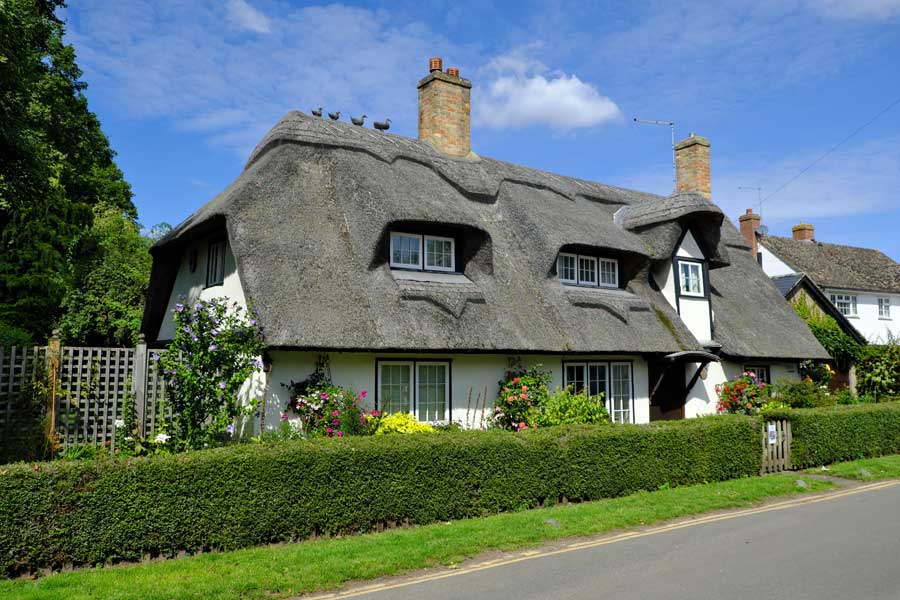
Look up as you pass through the village to see hares, pheasant, and ducks on the thatched roofs, and in the village square itself spot the letters T and G in ironwork on the side of one house. We’re told it’s where Thomas and his family lived, near his forge.
How to pronounce Houghton
We tried out several ways – How-Ton, Hoo-ton, Huff-ton. I mean you never know with English spellings do you?
But the locals definitely call it Hoe-ton.
Snackattack
The National Trust café was busy with plenty of seemingly satisfied customers. The tiny Houghton Tea Room was also popular, with some lovely looking cakes. We, however, had to move on so instead, arming ourselves with a couple of magnums, we grabbed a bottle of water at the community-run store and headed off towards St Ives.
Through the Thicket
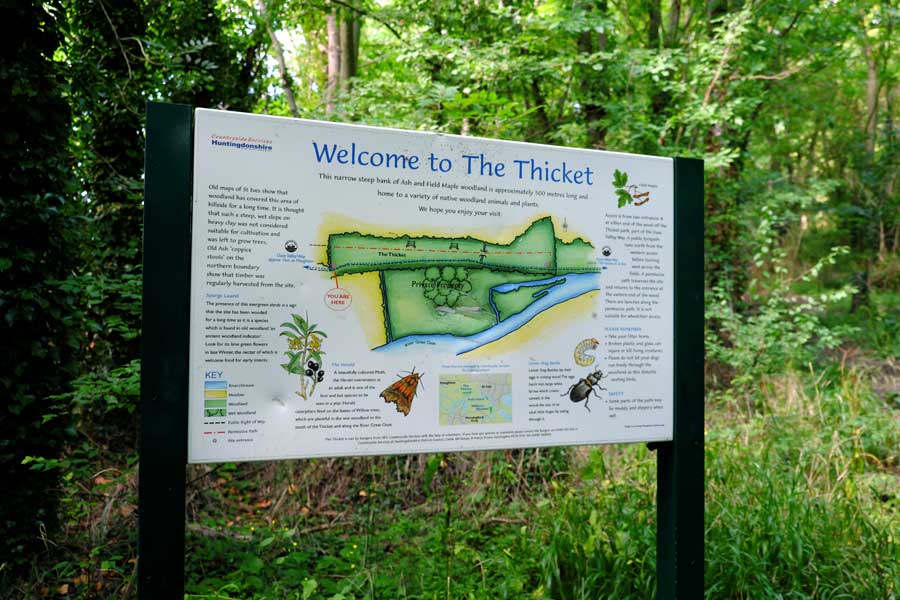
The Thicket Path is a great way to get from Houghton to St Ives and is where you’ll likely meet dog walkers and their happy hounds but unlikely any cats.
There’s been a path through the woods here for around a thousand years, but today it’s a broad cycle-way and footpath that runs through the ancient woodland.
It’s likely that the steep slope of heavy clay that flanks the path wasn’t suitable for cultivation so it’s been left alone for centuries, with just the occasional harvesting of timber. That makes it a haven for wildlife and a tranquil walk for families and dog-owners.
Holt Island
Just before the end of the Thicket Path, as you come in to St Ives itself, you find a nature reserve, tucked away on the riverside. Formerly used to grow willow for basket-making, the island was left to its own devices when the industry died out.
Now it’s home to voles, shrews, deer, badgers, bats and foxes and water-loving plants. Butterflies, and dragonflies skim the water’s calm surface and a variety of birds like kingfishers, warblers, and blackcaps can be seen.
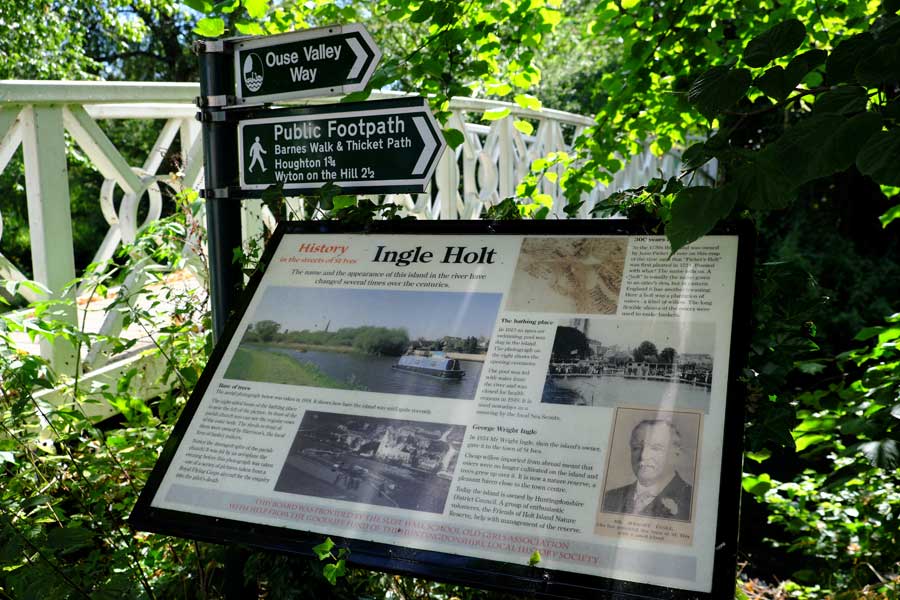
To maintain its peaceful balance, the island is only open weekends and Bank Holidays from April to October, although special visits can be arranged outside these times. Check their website for details.
St Ives Bridge and Old Riverport
If Holt Island is open you get great views of St Ives Bridge from its shores, sadly it wasn’t as we passed by. If that happens to you, just stroll along The Broadway into the town centre, past the family friendly Norris Museum, then turn right and cross over the bridge itself, and you’ll find a great vantage point on Hemingford Grey Meadow on the far side.
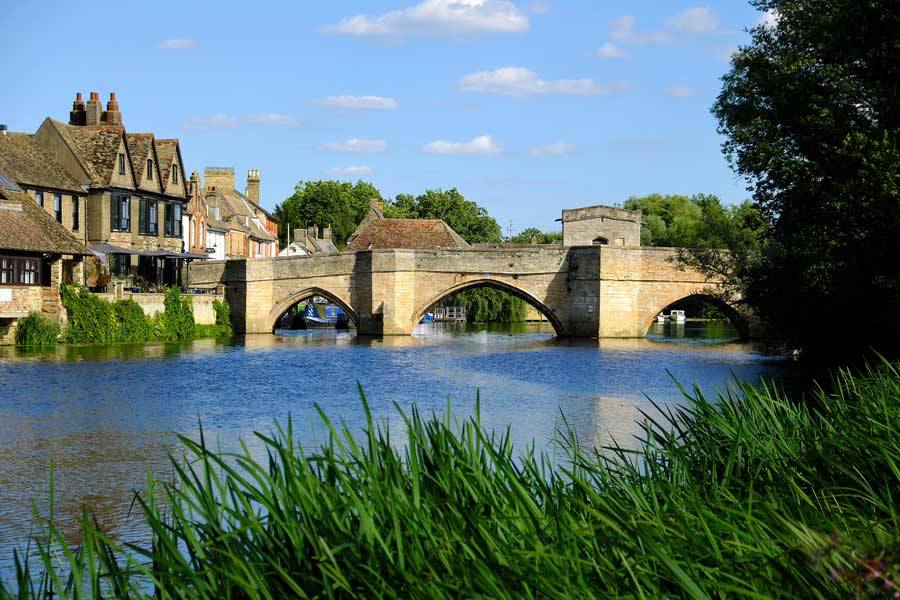
The bridge, which dates from the 15th century, is one of only four bridges in England incorporating a chapel. These chapels, which may have also served as toll-booths, were common in medieval times; a place where travellers could pray or give thanks for, a safe journey.
During the English Civil War the bridge was partially blown up by Oliver Cromwell’s troops as he held the town against King Charles I’s army. The two arches on the southern side were demolished and a drawbridge installed in 1645 as an extra defensive measure by Cromwell’s forces. The drawbridge remained in use until 1716 when the bridge was partly rebuilt.
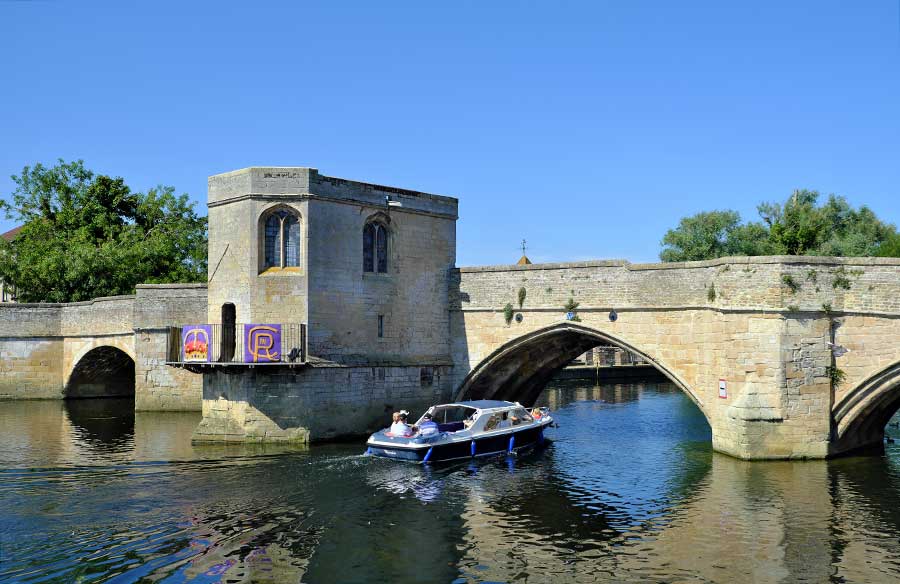
Today, its pale stone arches have two distinct styles – two rounded ones on the South side and two Gothic ones on the North. Traffic is restricted, so it’s a great place to dawdle, but watch out for bikes!
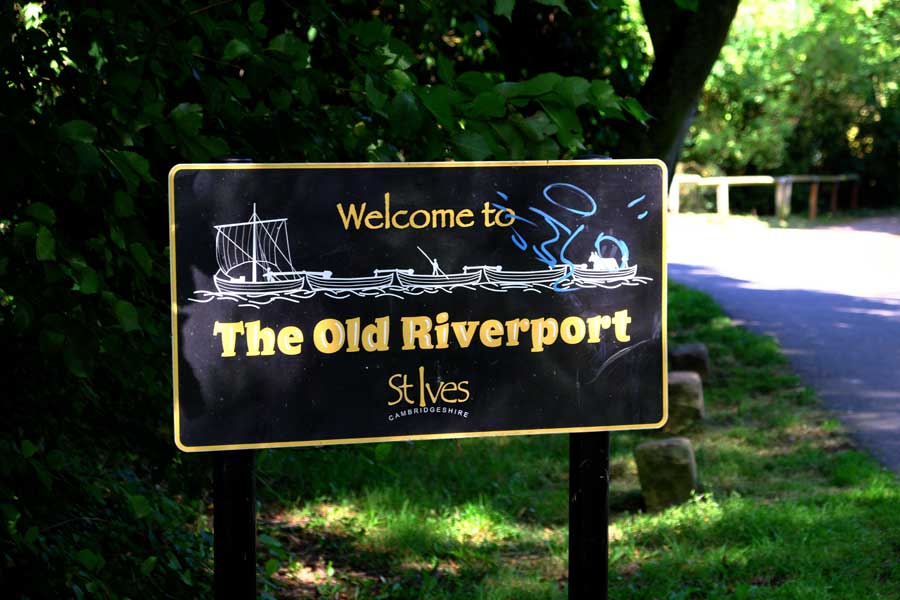
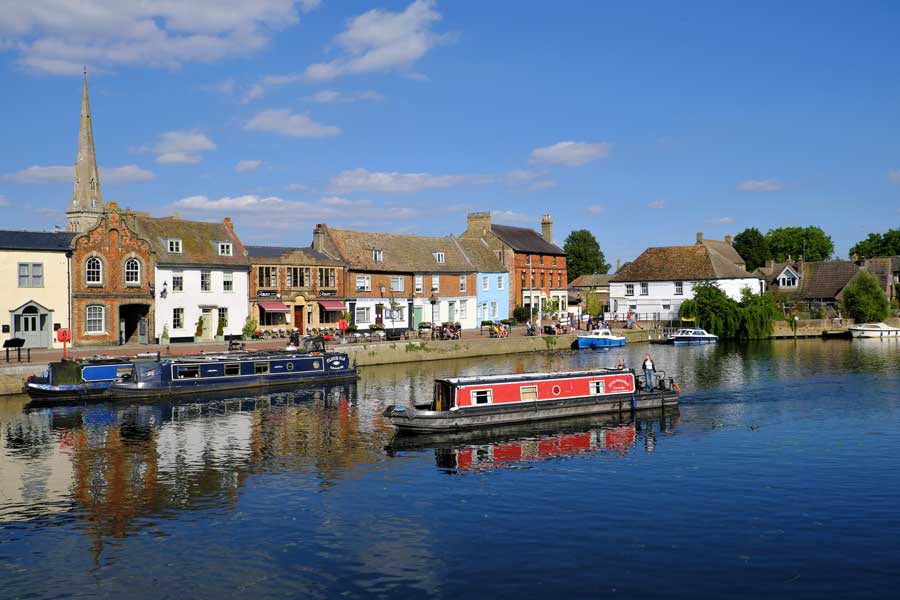
The Old Riverport is also great for idling away an hour or two, watching the river roll by or taking a boat trip. Once a busy inland port, with river traffic heading to and from The Wash and on to the Continent, St Ives was soon famous for its huge cloth fair with buyers coming from all across Europe.
There was a strict hierarchy about what could be sold where, with the cheaper stalls being set up in St Audrey Lane, away from the main market square.
In time that got shortened to ‘tawdry’, which is where we get the word meaning cheap and cheerful.
Oliver Cromwell in St Ives
Oliver Cromwell, the town’s most famous son, dominates the market square with an accusing finger and a hard stare.
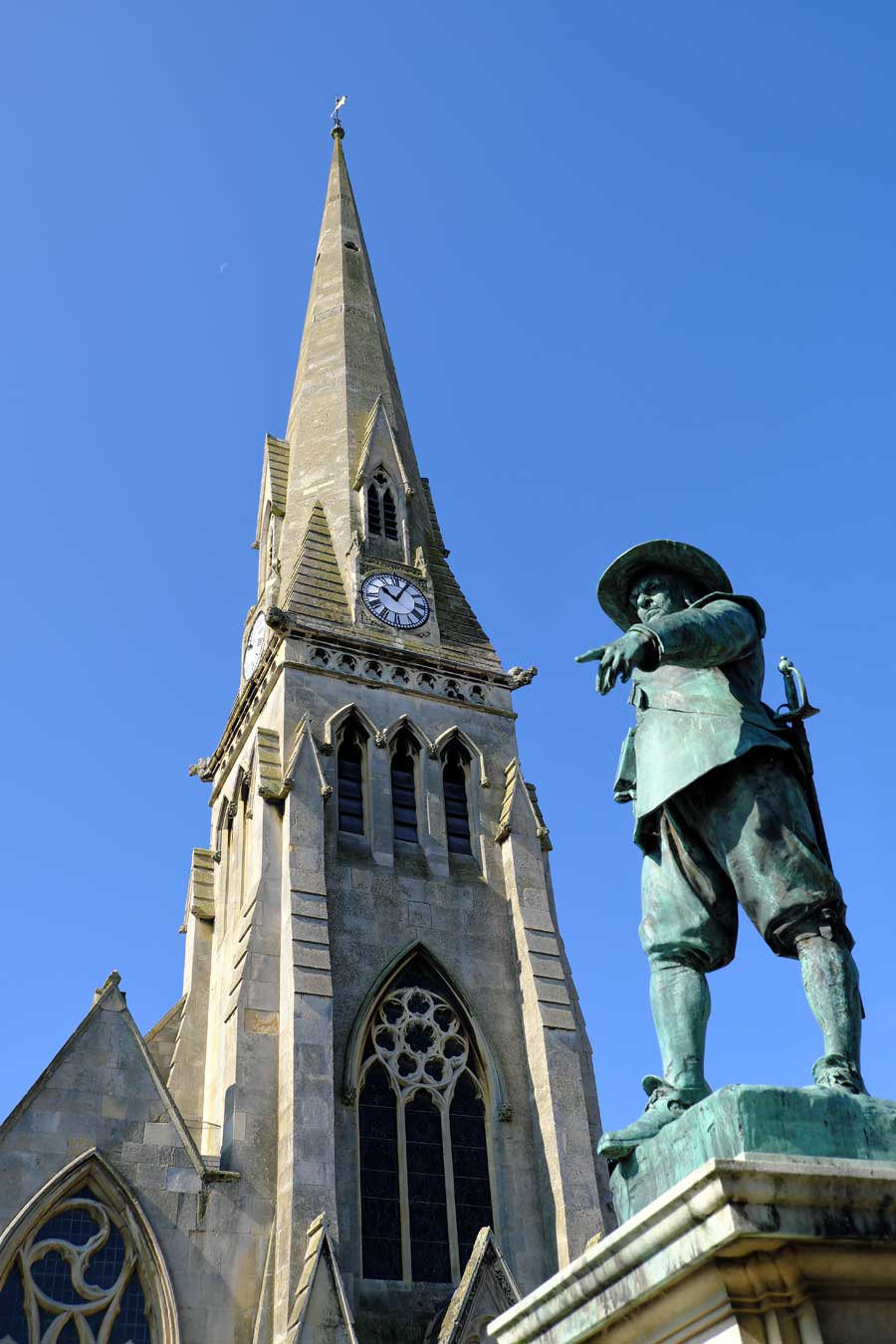
Not the most popular figure from English history, this is one of just 5 statues in the UK commemorating the Parliamentarian who led a revolt against the Royalists.
Born in nearby Huntingdon, he moved to a farm near St Ives in 1631, where he began to develop his independent religious beliefs that eventually led to Civil War.
Centuries later, when Huntingdon failed to raise enough money for a statue in his honour, St Ives stepped in.
There were rumours that dissidents planned to blow it up before it could be unveiled, but the ceremony went ahead in 1901 and Oliver now stands in his Puritan outfit, looking very stern.
Snackattack
Plenty of restaurant choices in St Ives and we hear Vadi Kitchen, Turkish restaurant is very good, but it was closed for their annual holiday when we were there. Instead we stopped off – twice, their cakes were so good! – at Tom’s Cakes in the 19th century former toll house on Market Hill.
Hemingford Meadow
The walk is said to take around 2 hours. Checking our watches, we realised almost 7 hours had passed! So for the last leg of our journey, as the sun began to set, we crossed St Ives Bridge once more and, just before the Grade II* Listed New Bridges causeway, took the path diagonally through The Dolphin Hotel and across Hemingford Meadow stopping only to watch the swifts skimming the water, feeding on the insects.
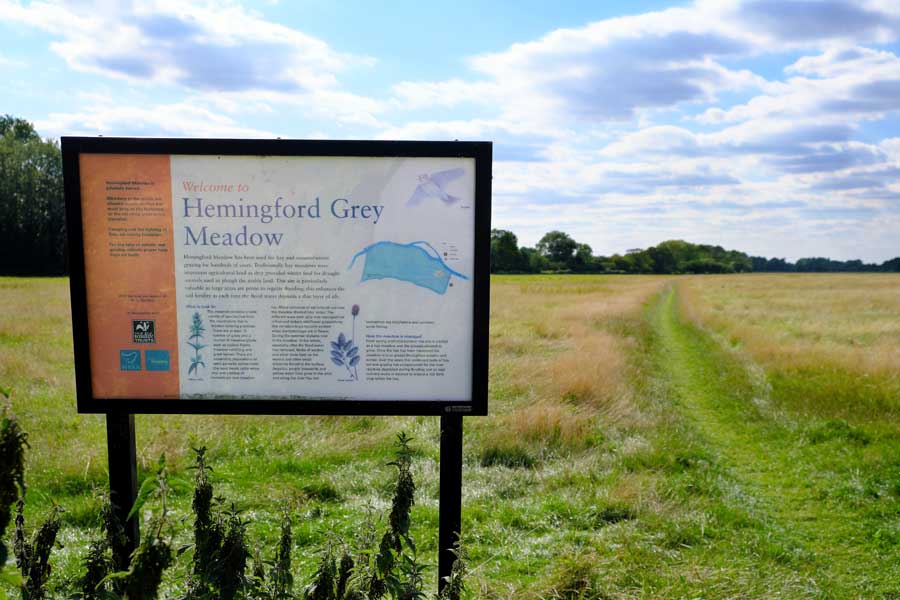
In spring and summer, it’s one of the best wildflower meadows in the region, bursting with birds, butterflies and buttercups.
It’s vital to stick to the wide path, to protect the habitat and it gets pretty muddy if it rains. During late autumn and winter its frequently impassable as the Great Ouse floods.
At the end of the meadow you come to (surprise, surprise) another Meadow Lane which leads into Mill Lane and back through the village of Hemingford Grey.
By this time, like us, you’re probably ready for a drink at The Cock!
Upon leaving the pub, we were treated to a beautiful fenland sunset.

Overall the walk is around 6 miles and the best part is it can start and end at any of the three main points.
Getting there
If you’re visiting by car, you can park for free, for up to 18 hours, at the Park and Ride in St Ives. There’s free on-street parking in Hemingford Grey and Hemingford Abbots, but pay and display charges apply in Houghton. Or if you’re coming from Cambridge catch the busway buses, they run up to every 10 minutes, and start your walk Pork Belly style with a little sustenance at Tom’s Cakes in St Ives.
Where to next?
• Secrets of Lincoln
• Cuckoo Trail at Hellingly, East Sussex
• Little Woodham, living history in action