
Cruises – love ’em or hate ’em, they’re a big part of the tourism industry, with bigger and bigger ships being launched every year.
And the number of people taking a cruise worldwide is rocketing, with more than 30 million passengers in 2023, with numbers expected to rise to nearly 40 million by 2027. (Source: Statista).
But there’s a backlash, and much talk of banning the bigger ships, although the reality is proving difficult.
Even so, many popular tourist destinations are finding ways to limit or prevent cruise liners from dropping anchor.
So where are cruise ships banned?
What tourist destinations limit cruises?
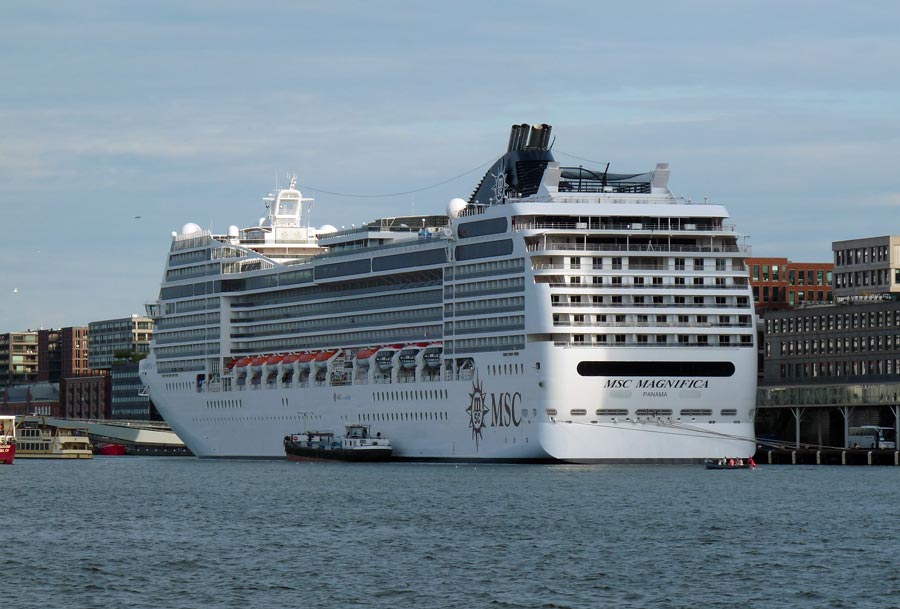
Amsterdam is the latest city to propose restricting the number of cruise ships calling at the port, ahead of a total ban in 2035. Currently, the limit is 190 ships a year, but the plan is to cut this to 100 in 2026. However, passengers will still be able to visit the city, but they will have to disembark from new terminals being built outside the centre.
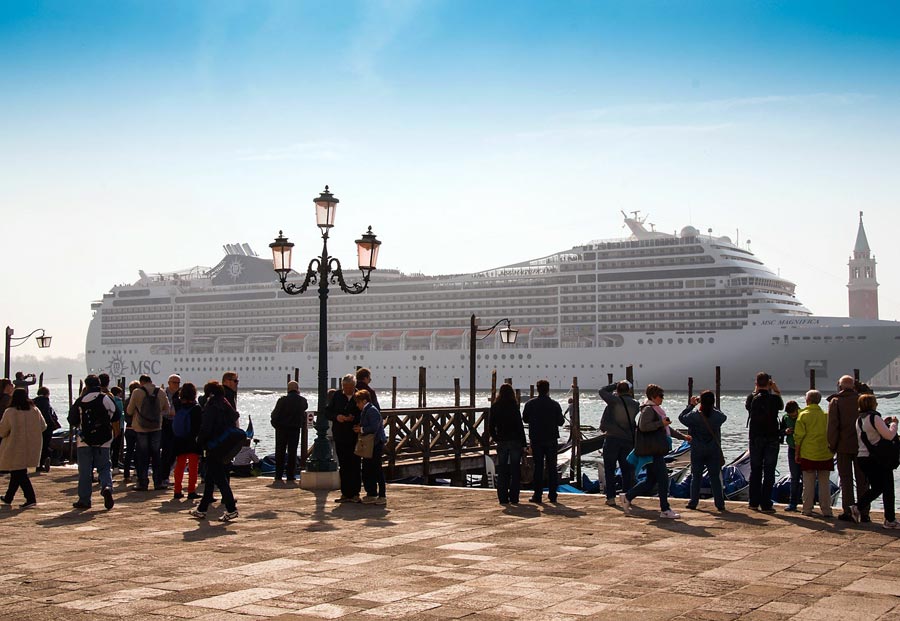
Venice officially banned large cruise ships from docking back in 2021, but as there is no established provision for them outside the lagoon, many are still docking close to the historic centre, although some cruise lines are using the ports at Chioggia or Ravenna instead.
Palma de Mallorca introduced a limit back in 2022, allowing just three ships a day to disgorge passengers, and only one can have more than 5,000 travellers on board.
Barcelona closed its north terminal to cruises in October 2023. The 340 or so ships that visit the city each year now have to use the Moll d’Adossat pier, away from residential areas.
The Greek government is considering increasing limiting cruise visits to the most popular islands, including Santorini and Mykonos, in 2025, and the beautiful Croatian city of Dubrovnik has already introduced tighter regulations.
There’s a suggestion that the Mediterranean port of Marseille may have to do something similar soon.
Even the remote Alaskan city of Juneau is proposing cruise ship free Saturdays, to give locals a break.
But for the people who make their living from tourism, it’s a delicate balancing act.
Why are cruise ships so unpopular?
Two main reasons – environmental and infrastructure.
Firstly, the big liners are often using port facilities that are just too small. Even at their lowest speeds they create potentially destructive waves and, as everyone saw in Venice in 2019, when the MSC Opera suffered engine failure and crashed into the pier, there’s potential for even more chaos.
The other reason is the sheer number of visitors, most of whom only stay for a few hours, packing the streets and major sites yet contributing little to the local economy. The cost of clearing up after the hordes then falls on residents and businesses, who see little or no benefit from tourist spending.
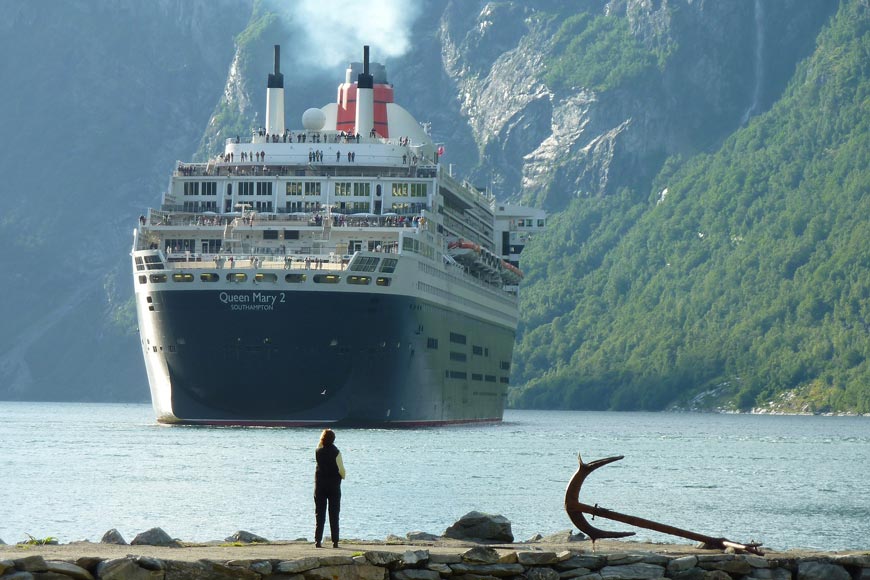
A study in Bergen in Norway, a popular fjord cruise destination, showed that the average spend in the town of a cruise ship passenger was under 23 euros.
Do cruise ships have a future?
Well, the big companies think so, and demand is growing.
Bigger ships are being built, and longer routes are planned, with some voyages lasting more than a year.
Sustainability, cutting carbon emission, developing new technology and tackling environmental concerns are key, and the race is on to produce the first electric powered cruise liner.
Originally the choice of older people, more and more cruise companies are focussing on voyages with family-friendly facilities and entertainment for young adults.
So cruises are here to stay – but if the trend to ban bigger ships continues, they might have to change their stopover points!
Where to next?
• New Entry/Exit system for Europe
• Tourist taxes
• B*ll*cks to the Bucket List