
Let’s be honest, with fuel prices skyrocketing, plus the new EU Entry/Exit System (EES) making the Dover queue visible from the International Space Station, the glamour of a quick European getaway is losing its lustre. If you aren’t keen on a fingerprint and facial scan just to get a croissant, why not embrace the “Destination Dupe”?
Here are nine UK places where, if you squint and ignore the nearby Greggs, you can pretend you’re deep in the heart of Europe. And by choosing public transport you aren’t just dodging the queues; you’re opting for sustainable travel.
All for the price of a railcard, a bus ticket, and a bit of optimism.
Portmeirion (Wales) – The Italian Riviera
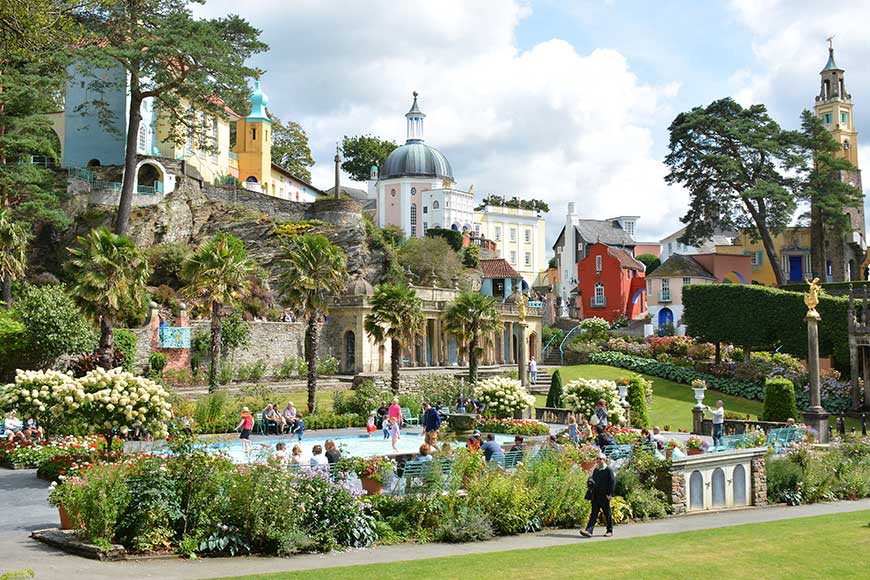
Forget Portofino; we have Portmeirion in Gwynedd. Built by Sir Clough Williams-Ellis to prove you can build something pretty without ruining the view, this pastel-hued village is peak “Mediterranean Dream.”
The Vibe: Technicolor piazzas and sub-tropical plants that have no business surviving in Wales.
The 2026 Reality: It remains a private village, so you’ll need to pay to enter (around £20 for a standard day ticket, though special events like the Gwyl Portmeirion Festival in July and August can push tickets to £53.50). If you want to see Jools Holland & Friends at the festival on 29 August 2026, book now.
How to get there: Train it to Minffordd, then it’s a leafy 20-minute walk.
Lynton & Lynmouth (Devon) – Little Switzerland
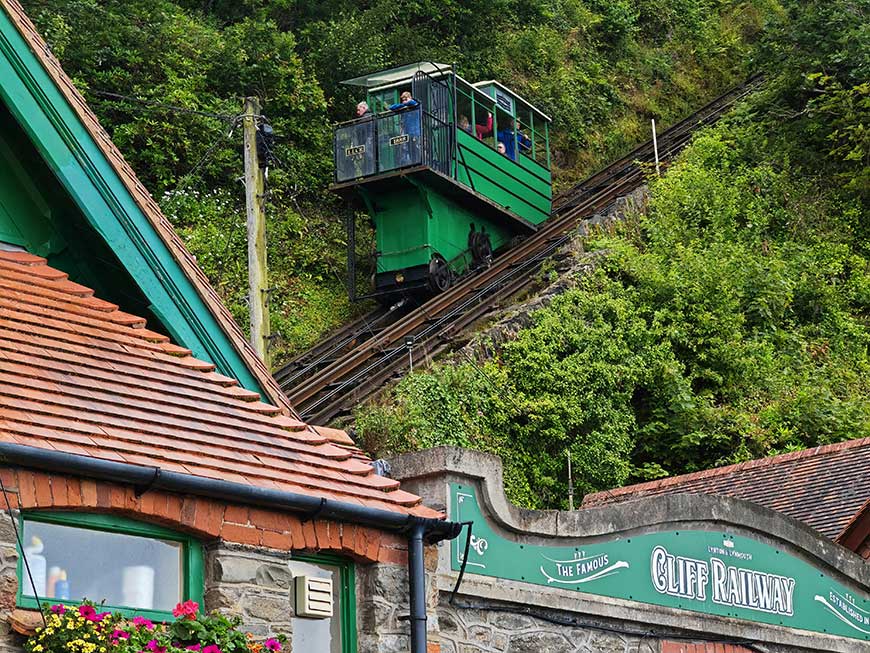
Back in the 1800s, Robert Southey called this “Little Switzerland,” claiming the East Lyn River reminded him of a Swiss alpine village and frankly, he wasn’t wrong. The steep, wooded gorges of Watersmeet are as close as England gets to a mountain pass without the actual mountains. It’s all steep ravines, rushing water, and alpine-esque charm.
The Vibe: If the Alps had a seaside view and served better scones.
The 2026 Reality: The legendary water-powered Cliff Railway is back in action for the 2026 season. An adult ticket is a very reasonable £3.90, if you’re bringing a dog, it’s £1.00, and they get a window seat (if they’re lucky). Visit on 9 May 2026, you’ll catch the annual Cliff Railway Day and Steampunk Gathering celebrations.
How to get there: Rail to Barnstaple, then grab the 309/310 bus.
Culross (Scotland) – Rothenburg, Germany
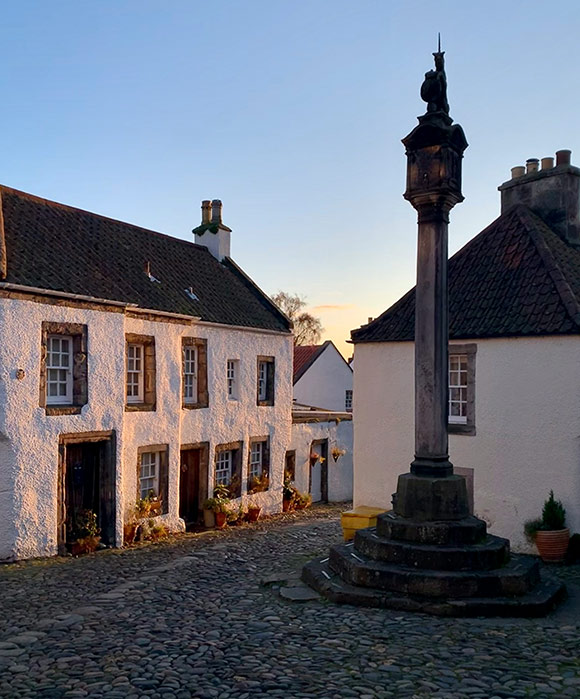
This isn’t just a coincidence; it’s commerce. In the 17th century, Culross was a thriving port trading coal and salt with the Low Countries. The yellow “harling” (lime wash) on the Palace and the crow-stepped gables are direct architectural imports from Dutch and Flemish designers. This Royal Burgh is so perfectly preserved it’s basically a film set and was used for the village of Cranesmuir in Outlander.
The Vibe: Medieval German efficiency, with a Scottish accent.
The 2026 Reality: Culross Palace is open daily. Entry is £14.00 for an adult, but because the building is effectively a 17th-century Jenga tower they limit it to 8 people every 15 minutes to save the 400-year-old floorboards and wooden beams from collapsing.
How to get there: Train to Dunfermline City, then a local bus. No passport, no problem.
Hitchin Lavender (Hertfordshire) – Provence, France

Why deal with the ETIAS paperwork for France when you can get the same “purple-haze” Instagram shot 30 miles from London? Hitchin was actually the lavender capital of the UK back in the 1500s. Even Queen Victoria was a fan, famously stopping at Hitchin station in 1851 just to pick up a bottle of their essential oils.
The Vibe: Rolling hills of lavender that smell like your grandmother’s guest room, in the best way possible.
The 2026 Reality: This year the main flowering season runs from Saturday 20 June to Friday 31 July. Crucially, 2026 tickets are on sale now so don’t dally, as the “Farmhouse Evenings” (with sharing platters and sunset views) sell out fast.
How to get there: A quick 30-minute dash from London Kings Cross to Hitchin, then a short taxi to Cadwell Farm.
Shetland Islands (Scotland) – Norwegian Fjords
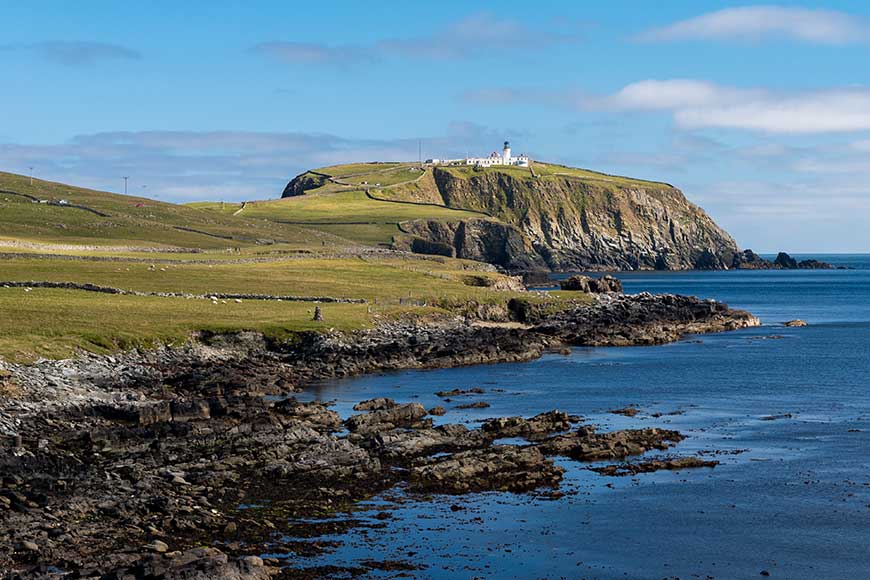
Technically closer to Bergen than London, Shetland is the ultimate “Scandi-Dupe.” It has the Viking heritage, the rugged cliffs, and the distinct lack of trees. Shetland was under Norse rule until 1469, and you can still hear it in the dialect today. The “Ting” valley (Tingwall) was the site of an ancient Viking parliament, similar to those found in Iceland and Norway.
The Vibe: Epic, wind-swept, and genuinely Nordic.
The 2026 Reality: The NorthLink Ferry from Aberdeen is the way to go. A peak adult single is £44.50, cabins are from £78.00, but you can snag a “Sleeping Pod” for £18 and arrive in Lerwick feeling only slightly like a sardine.
How to get there: Overnight ferry from Aberdeen or fly into Sumburgh if you’re feeling flush.
Lincoln Cathedral (Lincolnshire) – Chartres Cathedral, France
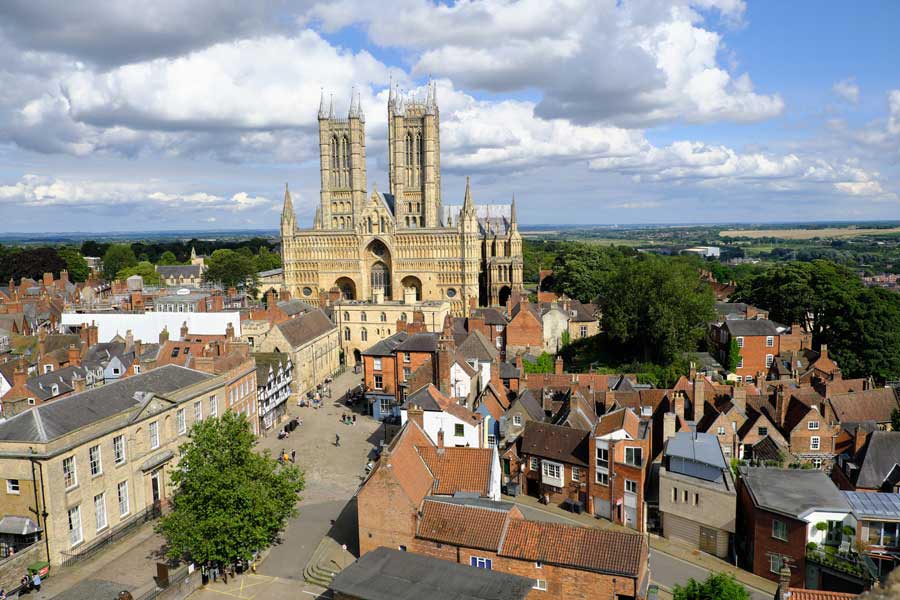
While Chartres represents the high-reaching, luminous French Gothic, Lincoln is majestically English. This was once the tallest building in the world (before the spire took a tumble in 1548), and it rivals any European Gothic masterpiece. When the original cathedral burnt down, it was rebuilt by St. Hugh of Lincoln using French-inspired Early English Gothic style. Historians often compare its massive nave and intricate vaulting to the great cathedrals of Normandy. See if you can spot the Lincoln Imp.
• Up on the roof of Lincoln Cathedral
• Secrets of Lincoln
The Vibe: High-ceilinged awe and “Steep Hill” (which earns its name).
The 2026 Reality: Entry is £12.00 for adults, but here’s a pro tip: it’s £10.00 on Sundays. Specialist tours cost £7.50 in addition to your Cathedral entry. No tours are available on Sundays. If you’re a UK student it’s actually free.
How to get there: Direct LNER trains from London Kings Cross take about 2 hours.
Lavenham (Suffolk) – Medieval Germany/Belgium
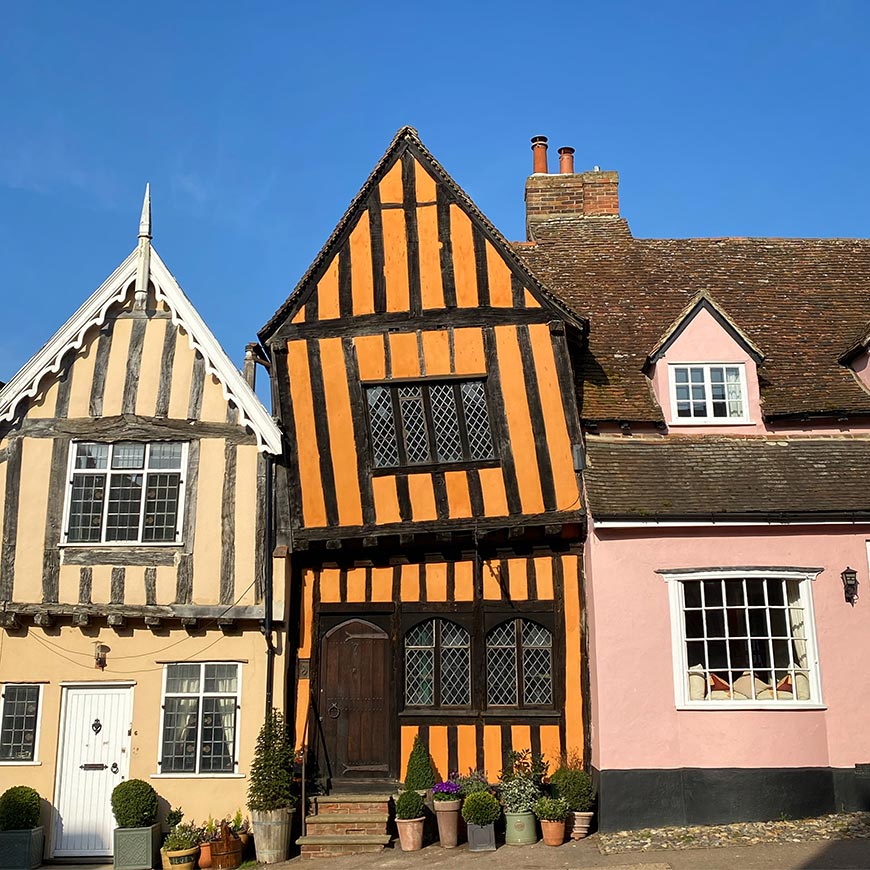
If you like your houses at a 45-degree angle, Lavenham is your town. It’s one of the best-preserved Tudor villages in the UK, echoing the timber-framed beauty of Bruges. Lavenham was so wealthy from the wool trade that it became a magnet for Dutch refugees in the 1500s. They brought new weaving techniques and influenced the “look” of the town. King Henry VII fined many residents for displaying too much wealth! The houses are crooked because the town grew so fast they used “green” (unseasoned) timber, which twisted as it dried. The wool merchant’s house, on the High Street, is said to have inspired the nursery rhyme, ‘There was a Crooked Man’.
The Vibe: Harry Potter’s birthplace (Godric’s Hollow) meets a very crooked Belgian chocolate box.
The 2026 Reality: Entirely free to wander the streets, though you’ll likely spend your savings on artisan bread at the local bakeries.
How to get there: Train to Sudbury, then the 753 bus.
Southwold (Suffolk) – Scandinavian Seaside
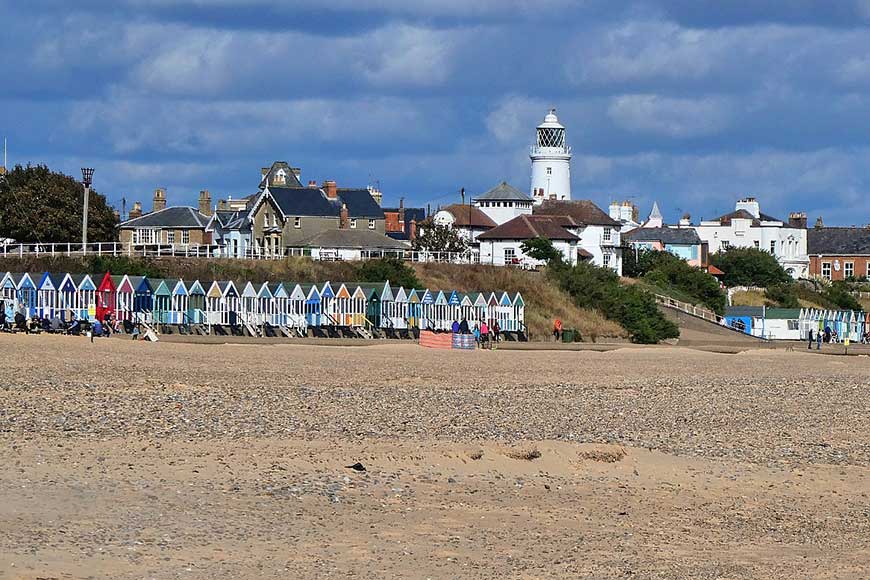
Southwold is the posh, clean-cut alternative to the typical “arcades and chips” British beach. There are no blaring slot machines here just gently strolling holidaymakers, and maybe the faint aroma of hops blowing in from the Adnams Brewery. The beach itself is blissfully uncluttered, the huts are more “tastefully curated retreat” than “windbreak and a flask,” even the seagulls seem to mind their manners (well, mostly). Take a wander along the prom and pier, then pop into the lighthouse for a look around. You’ll soon find yourself wondering if you’ve accidentally taken a wrong turn and ended up somewhere on the Danish coast
The Vibe: A Copenhagen summer, with better beer (thanks to the Adnams Brewery).
The 2026 Reality: Take a walk on the pier and a tour of the lighthouse – adults £15.50, child 7 to 17 years old £11.50 (advanced booking is best). The brewery is a must. An Adnams Brewery Tour currently costs £27.50 and is a local rite of passage. If you insist on driving, be warned: Southwold parking is a blood sport in the summer. Seasonal parking at the pier is £8.30 for the day.
How to get there: Train to Halesworth or Darsham, then a bus.
Bourton-on-the-Water (Gloucestershire) – Venice, Italy
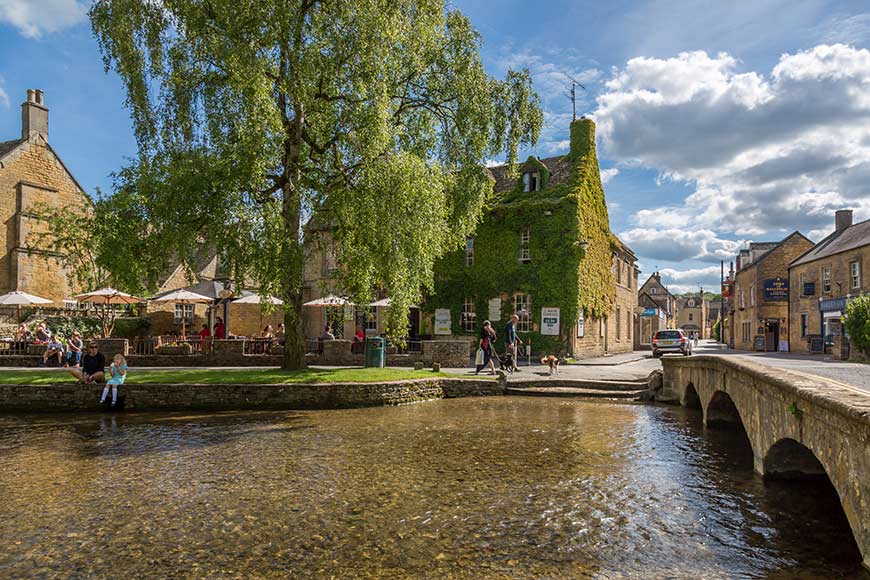
They call it the “Venice of the Cotswolds” although this village trades gondolas for honey-coloured stone and Italian canals for the shallow, sparkling River Windrush. While it lacks the salt water and singing gondoliers, the five stone bridges built between 1654 and 1953 arch over the water to provide a quintessentially “Venetian” backdrop.
If you think the current houses look old, they’re practically brand new in the grand scheme of things. Human activity in Bourton dates back to 4000 BC, with recent excavations uncovering a Mesolithic structure from around 8000 BC, one of the oldest man-made structures in Britain. Not to be outdone, the Roman Empire moved in from about 43 to 410 AD, leaving behind a “transport café” (yes, really), a posting-house, and a bakehouse along the sides of the Fosse Way.
Though you’re walking on ancient ground, most of the “chocolate box” buildings you see were built in the 17th and 18th centuries.
The Vibe: Venetian charm, but with more ducks and significantly less salt water.
The 2026 Reality: Be prepared for the parking Tourist Levy – the village has been using 50p of the parking fee to fix their paths and bridges. Also, avoid Station Road in late July/early August 2026; Thames Water has it scheduled for closure, and if you’re visiting on Bank Holiday Monday, 31 August 2026, prepare for the annual “Football in the River” match. It’s exactly what it sounds like: 30 minutes of soggy football action in ankle-deep water.
How to get there: Train to Moreton-in-Marsh, then the 801 bus. Parking at Rissington Road will set you back £10.60 for the day, so the bus is definitely the “Venetian” choice.
So, there you have it. While a sunset in Santorini or a bratwurst in Berlin has its charms, the reality of 2026 travel, complete with biometric passport checks, EES queues that move at the speed of a tectonic plate, not to mention the eye-watering cost of a tank of fuel, is distinctly less romantic.
What ever scenery you’re chasing, the UK has plenty of secrets that don’t require a frantic search for your European travel adapter. Plus, there is one major advantage to the British “dupe”. Nobody is going to judge you for ordering a full English breakfast instead of a fondue!
So, grab your railcard, pack a sensible mac (it is Britain, after all), and go find your own slice of Europe at home.
Looking for a place to stay? try our Travel Shop
If you’ve enjoyed browsing our website, learned something new, or just had a smile because of what we do – we’d love your support to keep the good stuff brewing!
Travelling soon? Things to do and attractions not to miss with Get Your Guide …
Where to next?
• Newhaven Fort For A Great Sussex Day Out
• 10 fascinating things to see in Norwich Cathedral
• Secret Gardens of London