
Unless you’re a food history fan, you may never have heard of Agnes Marshall – entrepreneur and culinary pioneer. But this queen of the Victorian ice-cream scene changed the world of desserts forever.
At a time when Victorian women were looking to offer more lavish and exciting treats to their dinner guests, Agnes was at the forefront of experimentation and invention, with cookbooks, catering classes and ground-breaking kitchen equipment.

Book of Ices, 1885
Pork Belly loves collecting recipe books, the more unusual the better.
Having invested in an ice-cream maker, he was searching for inspiration and came across the Book of Ices.
First published in 1885, ours is a modern reprint, but it has all the original recipes. And it’s a cracker – packed with great ideas and instructions that are easy to follow, unlike many cookery books of the time.
Agnes Marshall has been overlooked by history and unfairly overshadowed by a certain Mrs Beeton. Far from a one-hit, ice queen wonder, she was simultaneously an author, lecturer, businesswoman and entrepreneur.
10 reasons why Agnes Marshall was queen of the Victorian ice-cream scene
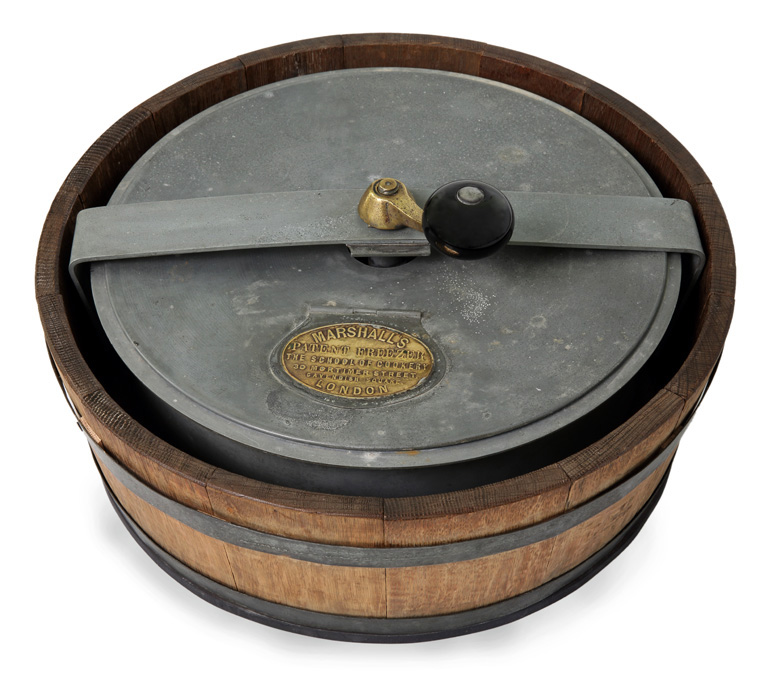
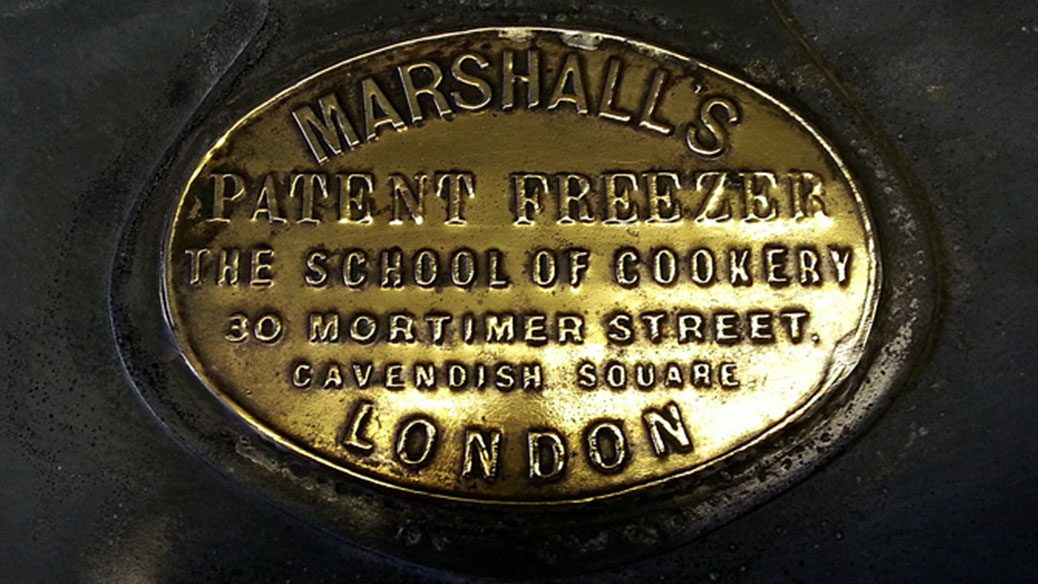
1. She invented Marshall’s Patent Freezer
Before Agnes, sorbets and ices were usually created commercially and bought in for special occasions.
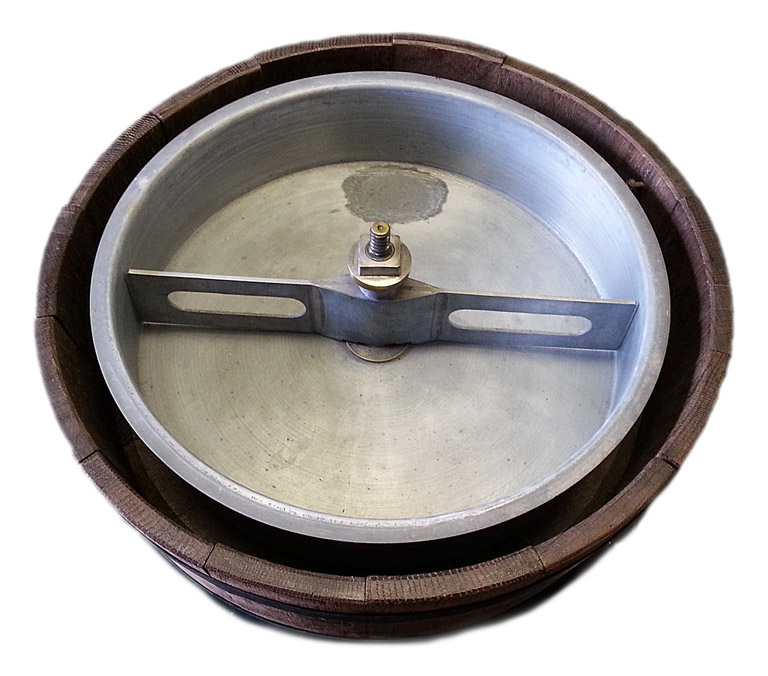
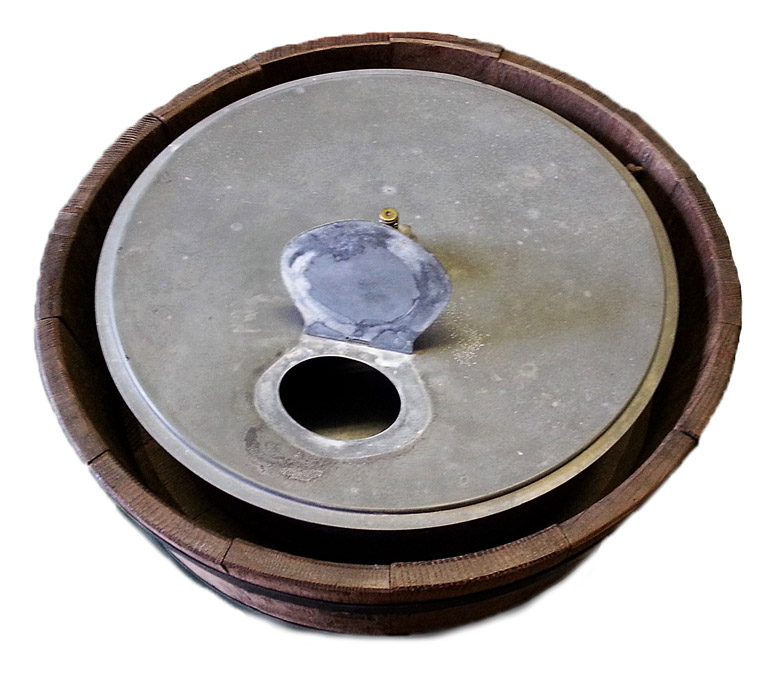
Her hand-cranked freezing machine had a shallow, turning drum and a stationary paddle. The chilling process was generated by surrounding the churn with lumps of ice and salt.
According to an advert at the time, it made ‘smooth and delicious’ ices in three minutes.
With this invention, and an ‘ice-cave’ to keep them frozen until they were needed, hostesses could serve freshly-made ices.

The London Canal Museum is dedicated to the fascinating history of the ice-trade and has a replica, made with stainless steel for hygiene reasons, which they use occasionally, giving visitors a taste.

2. Agnes made cookery schools popular
In 1883 Agnes and her husband Alfred bought a cookery training school in Marylebone, London and renamed it the Marshall School of Cookery.
Within two years she had increased the number of students from just forty to around two thousand.
The school ran classes seven hours a day, six days a week and Agnes arranged guest tutors for specialities such as curry and French haute cuisine.
Even more extraordinary was that she owned the building outright – unusual for a woman in that era, as property ownership for women was legalised in Britain only a few years before.
3. She understood the power of networking
Agnes established a nice little sideline, running an agency for hiring out domestic servants.
Her classes were pitched mainly at cooks catering for upper class Victorian households, a captive audience who frequently needed to hire an extra pair of hands and would be prepared to recommend Marshall’s as a name to trust.
So one strand of the business fed into the other. Nice work, Agnes!
4. She created her own label
Agnes had one shop to sell the food prepared by the students and another selling household equipment and cooking supplies.
She created bespoke spices, flavourings and syrups, items she used prolifically in her own recipes, under her own Marshall’s label.
Always quick to spot marketing opportunities, she had the name Marshall’s embossed into cast-iron equipment and pressed into her glass bottles of flavourings and colourings.
5. She toured the country
Agnes gave lectures, demonstrations and talks on food hygiene. This gave her the perfect opportunity to promote her goods and services.
The events were popular enough to get her plenty of press coverage.
One contemporary account from The Times states,
A crowded audience assembled on Saturday afternoon to hear Mrs A. B. Marshall demonstratively explain several of the operations of high class cookery, and for two hours she completely engrossed the earnest attention of some 600 people
6. She wrote and published books
Agnes produced four cookery books, two were the definitive ones on ice-creams and sorbets.
The Book of Ices was published in 1885. Fancy Ices, which came in 1894, took the art to a higher level.
Cleverly, she referred to her first book in recipes for her second, making sure that you had to buy both. She explained this wonderful marketing ploy as ‘avoiding repetition’.
7. She used coupons
In 1886 Agnes started a weekly magazine, called The Table.
In it, she promoted her wares, her cookery classes and her ingredients.
She also printed coupons which could be collected and exchanged for a copy of her recipe book – something still used today to boost sales.
8. She invented the hand-held ice-cream cone
In 1888, Agnes began to sell an edible ice cream cone made from ground almonds.
It was called ‘cornet à la crème’ and would soon replace the less than hygienic glass ‘penny licks’ that street vendors used in England at that time.
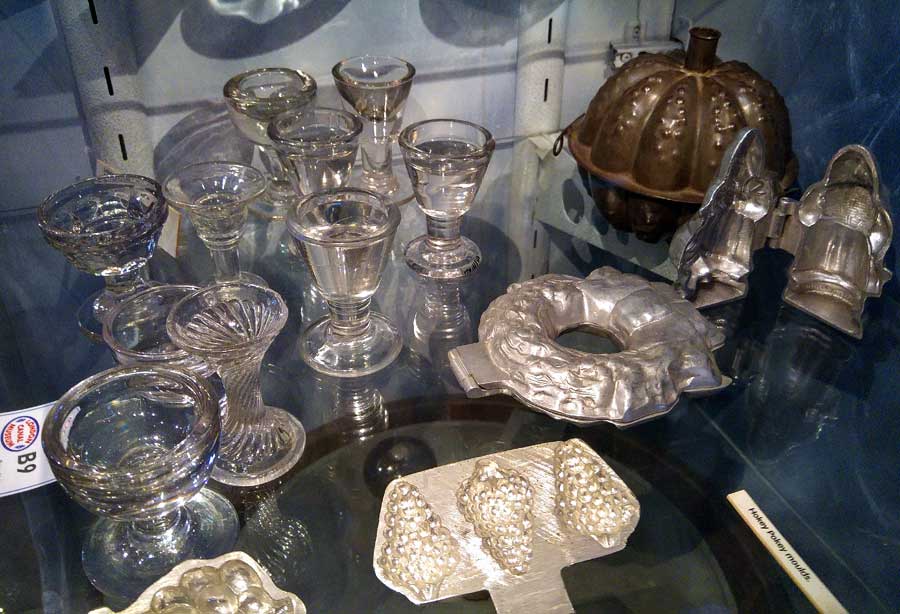
Until the practice was banned in London in 1898 and country-wide by the 1930s, ice-cream would be scooped into the glass dish and customers would simply lick it clean and hand the glass back to the vendor. A quick wash in a bucket of water, and it was ready to be used again.
Food safety, anyone?
But Agnes introduced her revolutionary cone recipe in Fancy Ices in 1894 and things began to change.
Others followed suit, but there are no known earlier references to the edible ice cream cone before Agnes. So her version pre-dates claims of the cone being invented in Manchester (1902) and America (1903).
9. Agnes predicted the future of ice-cream making
To add even more excitement to dinner parties, Agnes toyed with the revolutionary idea of using liquid gas to make instant frozen desserts.
In 1901 she wrote:
Liquid air will do wonderful things, but as a table adjunct its powers are astonishing, and persons scientifically inclined may perhaps like to amuse and instruct their friends as well as feed them when they invite them to the house.
By the aid of liquid oxygen, for example, each guest at a dinner party may make his or her ice cream at the table by simply stirring with a spoon the ingredients of ice cream to which a few drops of liquid air has been added by the servant; one drop in a glass will more successfully freeze champagne than two or three lumps of ice.
At picnics it would be invaluable and surely ought to be kept freely on hand in hospitals

That’s real thinking outside the box.
If Agnes were alive today, she’d be in charge of the nitrogen-ice cream stalls at food festivals up and down the country.
10. Her recipes still work well
It took Pork Belly just 25 minutes to make her raspberry sorbet which is sweet, tangy and totally delightful.
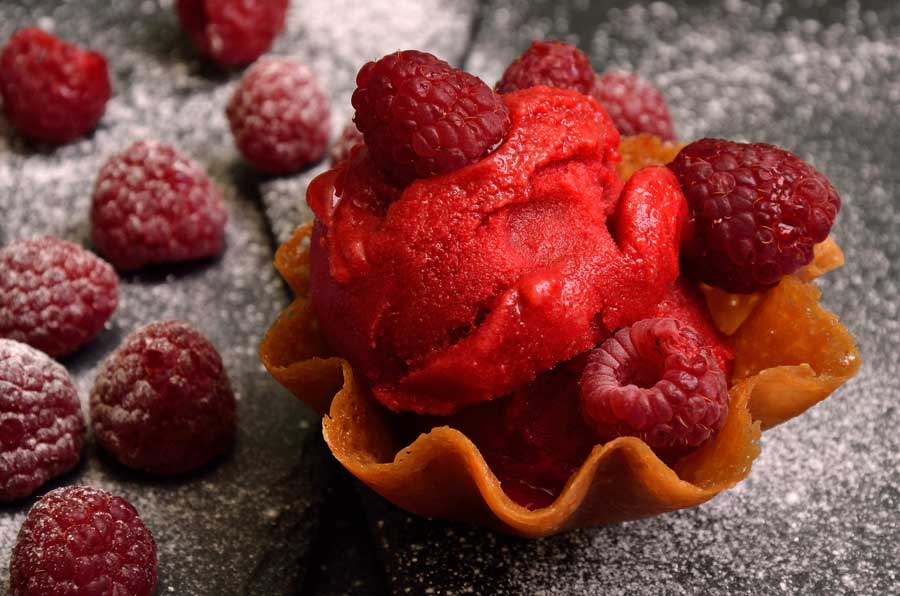

He then followed her instructions to the letter to produce a fine cherry ice-cream.
One thing to note is that Agnes liked to sieve her ingredients to within an inch of their lives, clearly preferring a smoother finish than some of the artisan ices we have today.
So you need a blender/fine sieve/pestle and mortar to faithfully re-create her classics.
I don’t think Agnes would approve of hokey-pokey with its crunchy toffee swirls!
Why is Agnes Marshall not famous?
Probably because she died before she could fully realise her potential. In 1905 at the age of 50, she became fatally ill from complications after falling from a horse several months before.
Others speculate that her husband’s decision to sell the rights to her books after her death to the same publisher as Mrs Beeton, might have led to her books being deliberately suppressed.
Or perhaps the fire that destroyed most of her archive papers in the 1950s meant no-one’s been able to carry out proper research on all her achievements.
Whatever the reason, you have to wonder what more she would have accomplished if she had lived longer.
If she were alive today I’m sure she’d embrace the world of TV, You-Tube, TikTok, Twitter and Facebook and give all those celebrity chefs a run for their money.
Need any further proof of Agnes B Marshall’s right to be hailed Queen of the Victorian Ice-cream scene? Here’s her view on the whole idea of desserts:
The aim of a properly constructed sweet is to convey to the palate the greatest possible amount of pleasure and taste whilst it is in no way either suggestive of nourishment or solidity
Hear hear!
Fascinated by the history of food?
London Canal Museum’s Ice House has more about Agnes B Marshall.
Additional images courtesy of Canal Museum, London and Wikimedia
Where to next?
• Chocolate, ginger and chilli brownie
• Langues de Chat biscuits
• Crumbs Brewing
Thank you for the very interesting introduction to Agnes B Marshall. she sounds admirable and should definitely be more well known. It has since been discovered she was fifty two years old when she died of cancer and not fifty.
I look forward to trying out some of her recipes, although with a vegan twist. 🙂
Hi Ria, Glad you liked our article about Agnes. We would love to know where you found the information about her age, as all our sources show she was born in 1855 and died in 1905.